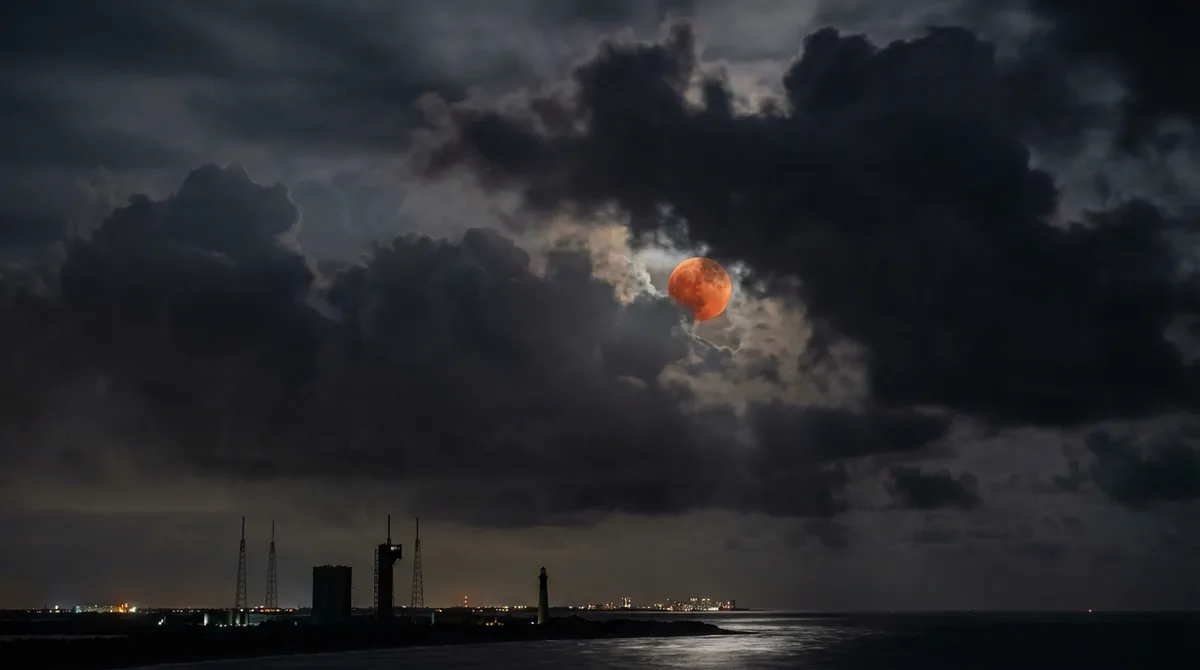
A total lunar eclipse turned the moon a deep red on the morning of March 3, 2026, but thick clouds blocked the view for much of Brevard County. The event, called a 'blood moon' because of its reddish hue, occurred just after 5:30 a.m. and lasted until nearly 6:30 a.m. Malcolm Denemark captured images from Titusville, while Craig Bailey photographed the eclipse over Cocoa's Hubert Humphrey Bridge.
The eclipse was part of a rare alignment of the sun, earth, and moon, with the moon passing through earth's shadow. For some, the clouds parted just enough to see the moon's transition from silver to crimson. Others, like residents near the Cocoa Beach Pier, saw only partial views. 'It was there for a few minutes, then gone,' said one viewer at the Kennedy Space Center Visitor Complex.
The phenomenon, known as a 'worm moon' eclipse because it occurs in March, is the first total lunar eclipse visible from Brevard since 2021. Astronomers had predicted the event weeks in advance, but unpredictable weather patterns left many disappointed. Local astronomy clubs set up viewing stations at Brevard Community College and the Sebastian Inlet State Park, though attendance was lower than expected due to the overcast conditions.
Despite the clouds, some photographers managed to capture the eclipse's peak. Bailey's photo shows the moon glowing above the Cocoa skyline, while Denemark's images from the Space Coast highlight the contrast between the darkening sky and the moon's reddish glow. The next total lunar eclipse visible from Florida will not occur until 2028, according to NASA.