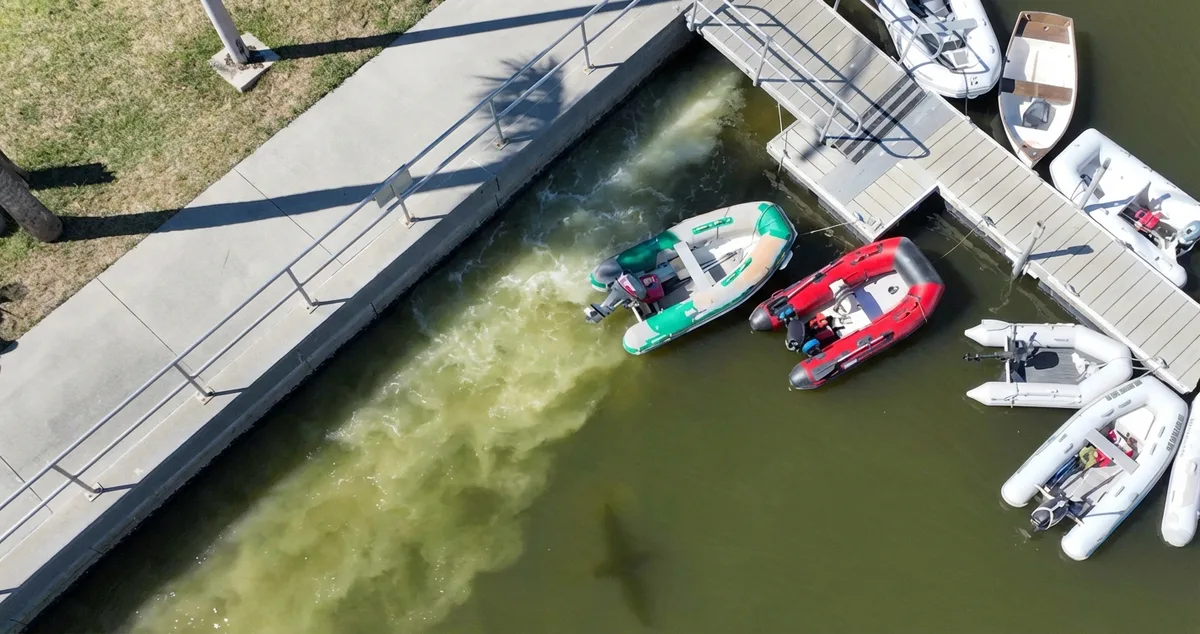
Titusville officials have launched a six-month pilot program using nanobubble technology to tackle pollution in the Indian River Lagoon. The city says the system pumps water from the lagoon, infuses it with microscopic oxygen-filled bubbles, and returns it to the waterway. If the test works, the city may expand the effort across Brevard County.
The technology relies on bubbles smaller than a grain of salt. These bubbles sink to the lagoon floor and increase oxygen levels in areas where it is low. Chris Stephan, global director for Moleaer—the company behind the system—said low oxygen levels are a key cause of environmental problems in the lagoon. The added oxygen is meant to break down muck and pollutants that fuel algae blooms and harm seagrass.
Mayor Andrew Connors said the city hopes the technology will reduce buildup on the lagoon floor and help seagrass recover. The pilot is the first test of nanobubble systems in Brevard County. Researchers from Florida Tech will monitor the project to see if it works.
The city says the process is simple: water is drawn from the lagoon, treated with nanobubbles, and released back. Stephan called the technology a "game-changer" for water quality. But he stressed the system must be tested in the lagoon’s unique conditions before it can be scaled up.
The pilot runs through the end of the year. If results show improvement, the city may seek funding to expand the program to other parts of the county. For now, officials are watching closely to see if the microscopic bubbles can make a measurable difference in one of Brevard’s most troubled waterways.