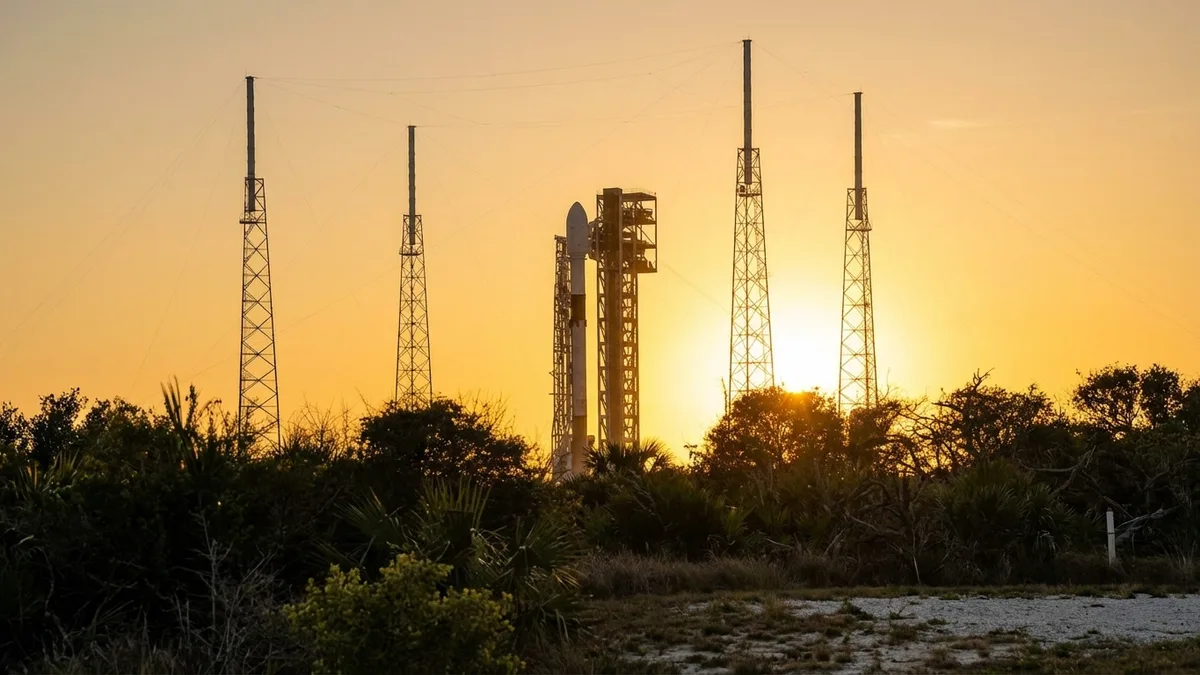
SpaceX plans to launch a Falcon 9 rocket on the EchoStar XXV mission from Cape Canaveral Space Launch Site on Tuesday, March 10. The launch was originally set for 11:19 p.m. Monday but was moved to 12:19 a.m. due to weather delays. A backup window remains open on Tuesday starting at 11:19 p.m. if conditions change. The mission will send a satellite to geosynchronous transfer orbit, a common trajectory for communications satellites.
This will be the 14th flight for the Falcon 9’s first-stage booster, which will attempt to land on the droneship A Shortfall of Gravitas in the Atlantic Ocean after stage separation. The booster, previously used on missions like Starlink and government contracts, has completed multiple flights since its debut in 2015. SpaceX typically reuses boosters up to 10 times, though some have flown more than 20 missions.
The launch window shift reflects the challenges of Florida’s variable weather, which often affects Space Coast operations. Nearby Kennedy Space Center also faces similar constraints, though its next major mission isn’t scheduled until late 2026. SpaceX has conducted 12 launches from Cape Canaveral since 2020, with most occurring during the spring and fall when atmospheric conditions are more favorable.
Residents near the launch site in Brevard County have been notified of potential sonic booms and bright lights during the mission. The satellite will be deployed approximately 11 minutes after liftoff, with the first stage landing about eight minutes later. No public viewing events are planned, but SpaceX will stream the launch live online. The mission is part of a growing trend of commercial satellite deployments from the Space Coast, which hosts both SpaceX and Blue Origin launch facilities.