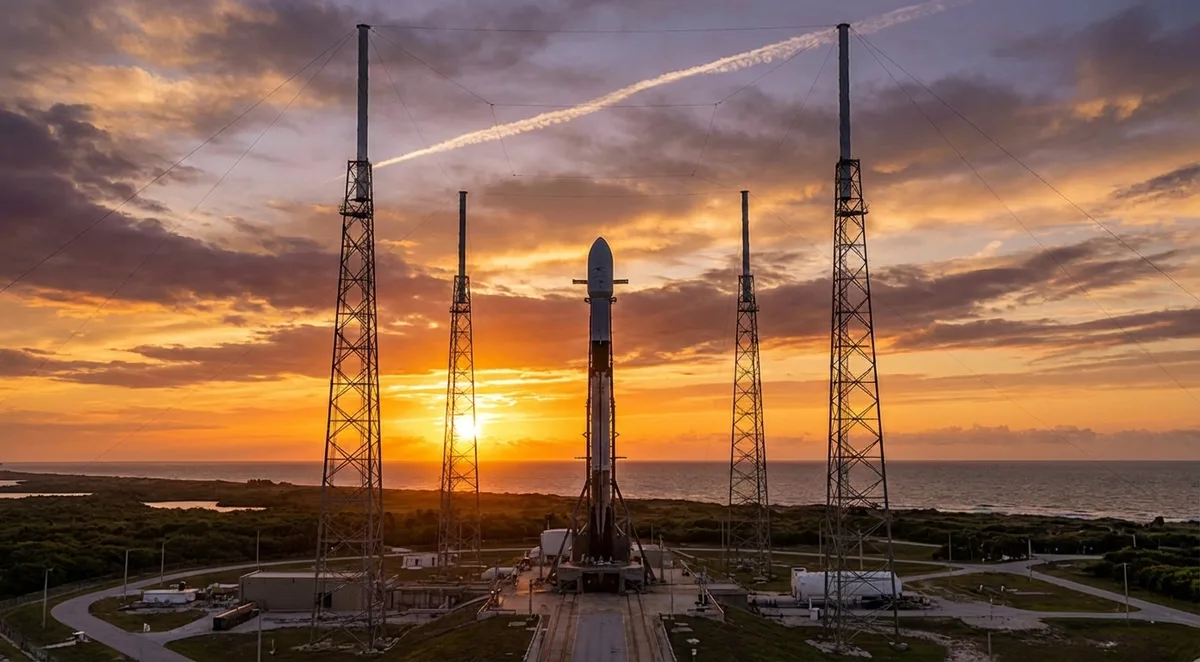
SpaceX is aiming for Monday, March 9, at 11:19 p.m. ET to launch the EchoStar XXV mission from Space Launch Complex 40 at Cape Canaveral Space Force Station. The 149-minute window includes a backup opportunity on Tuesday, March 10, with the same time frame. This will be the 14th flight for the Falcon 9’s first stage booster, which previously supported missions like Crew-9 and multiple Starlink launches. The booster will land on the A Shortfall of Gravitas droneship in the Atlantic Ocean after stage separation.
The mission will carry EchoStar XXV, a communications satellite for the EchoStar company. The satellite will travel to geosynchronous transfer orbit, a common destination for communications payloads. SpaceX has not disclosed specific details about the satellite’s capabilities or intended use, but the launch marks another step in the company’s routine operations from Florida’s east coast.
The launch window was chosen based on weather forecasts and orbital mechanics. If the primary attempt fails, the backup window on March 10 provides a second chance. SpaceX has reused the same booster multiple times, highlighting the company’s focus on cost-effective, sustainable rocketry. The booster’s previous missions include resupply flights to the International Space Station and commercial satellite deployments.
Residents and visitors along the Space Coast can watch the launch live via SpaceX’s official channels or local media outlets. The event is expected to be visible from much of Florida’s east coast, depending on weather conditions. No public viewing events are planned at this time, but SpaceX often shares real-time updates online.
This launch continues SpaceX’s dominance in the commercial space sector, with the company handling a growing share of satellite deployments. The EchoStar XXV mission is part of a broader trend of private companies expanding global communications networks through space-based infrastructure.