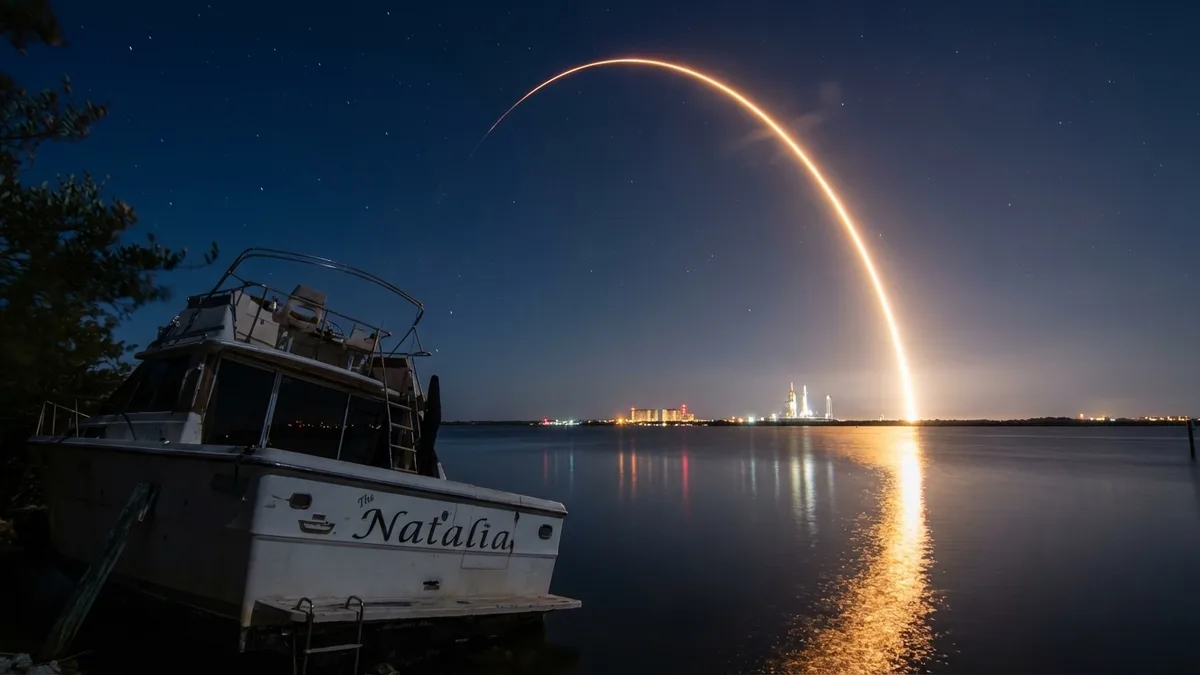
SpaceX is set to launch a Falcon 9 rocket from Launch Complex 40 at Cape Canaveral Space Force Station on Monday, March 9, at 11:19 p.m. The mission will carry the EchoStar XXV broadcast satellite for DISH, marking the first time the company has launched a broadcast satellite on a Falcon 9. The launch window extends until 1:49 a.m., giving the team flexibility if delays occur. SpaceX confirmed the launch time remains unchanged despite a minor delay update earlier in the day. Weather conditions are favorable, with the Space Force 45th Weather Squadron predicting a 90% chance of clear conditions during the window.
The rocket will follow an eastern trajectory, with the first stage booster targeting a landing on the A Shortfall of Gravitas drone ship in the Atlantic Ocean eight and a half minutes after liftoff. No sonic booms are expected in Brevard County, as the booster will be out of range by that time. The mission is part of SpaceX’s ongoing efforts to expand satellite capabilities, though this launch differs from typical Starlink missions. DISH officials have not provided specific details about the satellite’s function, but it is expected to enhance broadband and television services.
The Florida Today Space Team will provide live updates 90 minutes before liftoff, starting at 9:30 p.m. Monday. The launch will be visible from much of Florida’s east coast, with the rocket’s brightness expected to rival the full moon. This is the second Falcon 9 launch from Cape Canaveral in 2026, following a Starlink mission in January. The EchoStar XXV satellite will be deployed into low Earth orbit, where it will begin transmitting signals to DISH customers.
SpaceX’s reuse of Falcon 9 boosters has become routine, but this mission highlights the company’s growing role in commercial satellite deployment. The launch comes as Brevard County continues to host a mix of government and private space missions, with NASA’s Kennedy Space Center and private companies like Blue Origin and Rocket Lab also operating in the region. The success of this launch could pave the way for more broadcast satellite missions in the coming years.