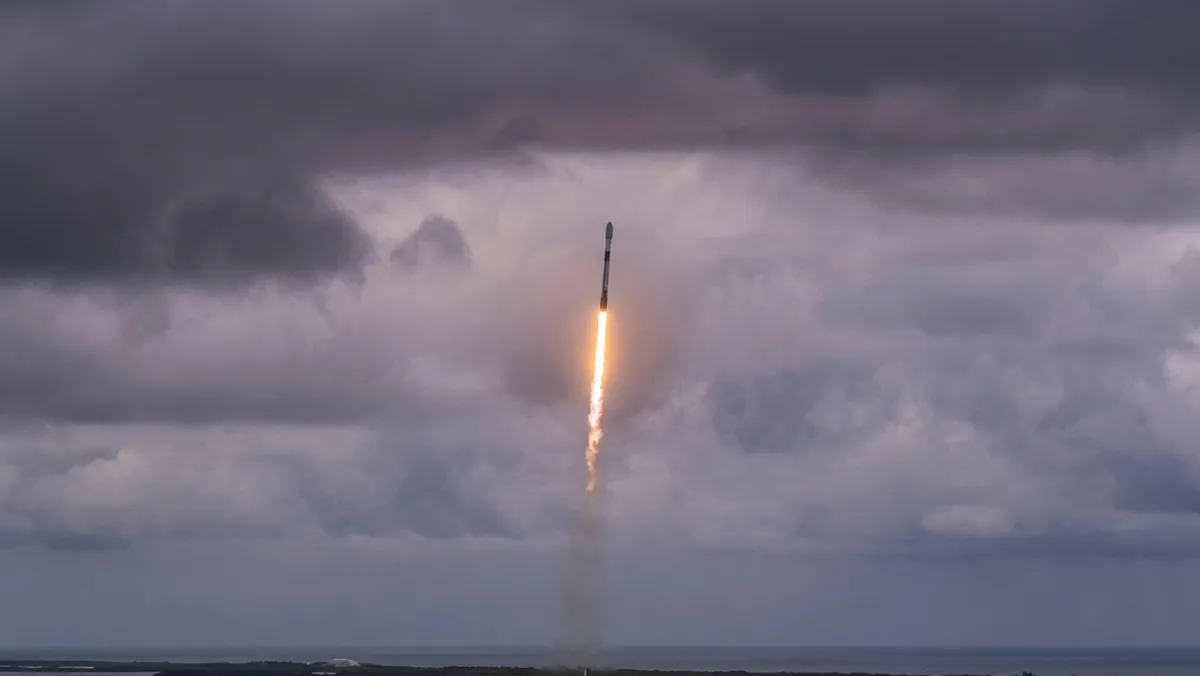
SpaceX's Falcon 9 rocket launched 52 Starlink satellites on Pi Day, March 14, 2026, from Cape Canaveral Launch Complex 40. The mission, part of the Starlink 10-48 batch, lifted off at 8:45 a.m. ET and reached orbit after a northeast trajectory. The launch was delayed multiple times but met its window before 10 a.m. The Falcon 9's first stage booster landed on the Just Read the Instructions drone ship in the Atlantic Ocean eight and a half minutes after liftoff.
The rocket's path gave residents north of Cape Canaveral a chance to see the ascent. No sonic booms were reported in Brevard County because the booster landed offshore. The mission followed a pattern established by previous Starlink launches, which have expanded SpaceX's global broadband network.
March 14 is celebrated as Pi Day because the date matches the mathematical constant 3.14159265359, used in orbital calculations. SpaceX has leveraged the date for past launches, including the first Starlink mission in 2019. This launch added to the more than 4,000 Starlink satellites already in orbit.
The mission was confirmed successful by SpaceX's tracking systems and drone ship cameras, which captured the booster landing despite no onboard video feed. The payload fairing, which protects the satellites during ascent, separated as planned.
Brooke Edwards, a space reporter for Florida Today, covered the event from Cape Canaveral Space Force Station. The Starlink 10-48 mission is part of SpaceX's ongoing effort to provide global internet coverage, with future launches planned from both Florida and California.