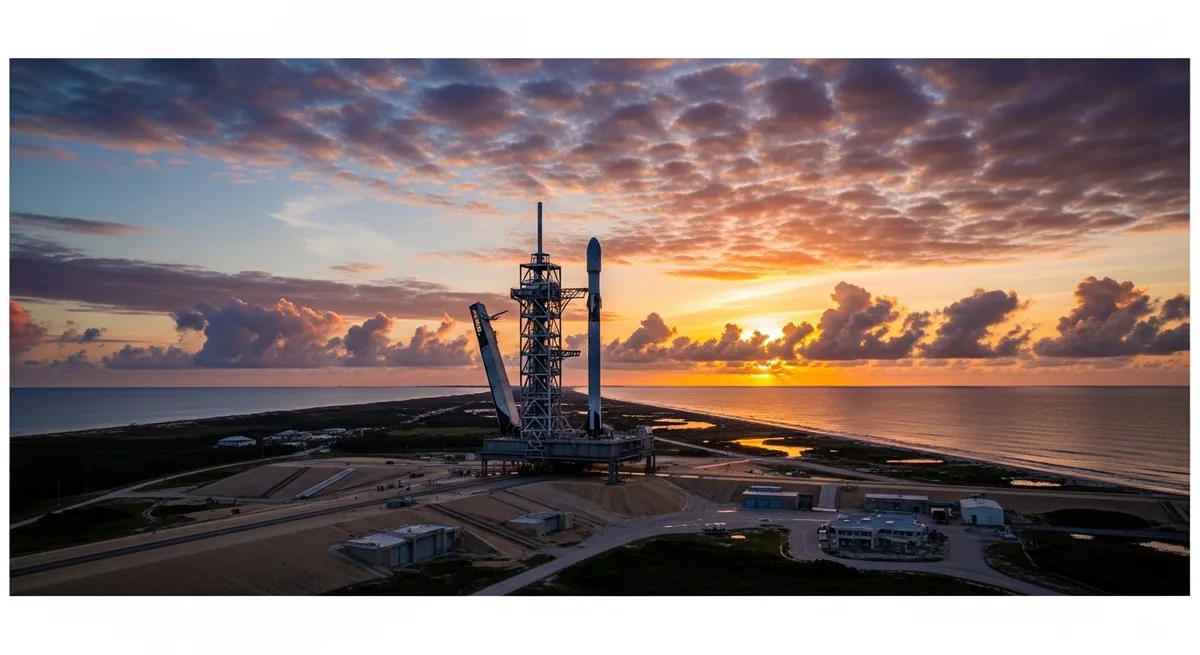
A SpaceX Falcon 9 rocket launched from Launch Complex 39A at Cape Canaveral Space Force Station just one minute after sunrise on Monday, Nov. 6. The mission, part of SpaceX’s Starlink satellite internet constellation, lifted off at 7:01 a.m. EST and was visible across much of Brevard County. The rocket’s first stage landed successfully at the company’s Landing Zone 1 near Cape Canaveral, a standard procedure for SpaceX missions.
The launch occurred during a window of favorable weather conditions, with winds and temperatures within acceptable ranges for flight. SpaceX officials confirmed the mission was fully automated, with no crew aboard the rocket. The Starlink payload consists of 52 satellites designed to expand global broadband coverage, particularly in rural and underserved areas.
Residents along the Space Coast reported seeing the rocket’s plume over the Atlantic Ocean shortly after liftoff. Local astronomer Dr. Emily Carter said the timing of the launch created a unique opportunity for skywatchers. “It’s rare to see a rocket launch so close to sunrise,” she said. “The sunlight made the plume more visible, which is a nice bonus for people who couldn’t get to the beach.”
SpaceX has conducted over 200 launches from Florida since 2010, with Cape Canaveral serving as a primary hub for the company’s operations. The Kennedy Space Center, managed by NASA, leases Launch Complex 39A to SpaceX under a long-term agreement. This particular mission was the 32nd Starlink launch of 2023 and the 12th of the month.
The rocket’s second stage continued to orbit, deploying the satellites into low Earth orbit. The mission is expected to contribute to Starlink’s goal of providing internet service to millions of users worldwide. No delays or anomalies were reported during the flight, and the spacecraft is now en route to its designated orbital slot.