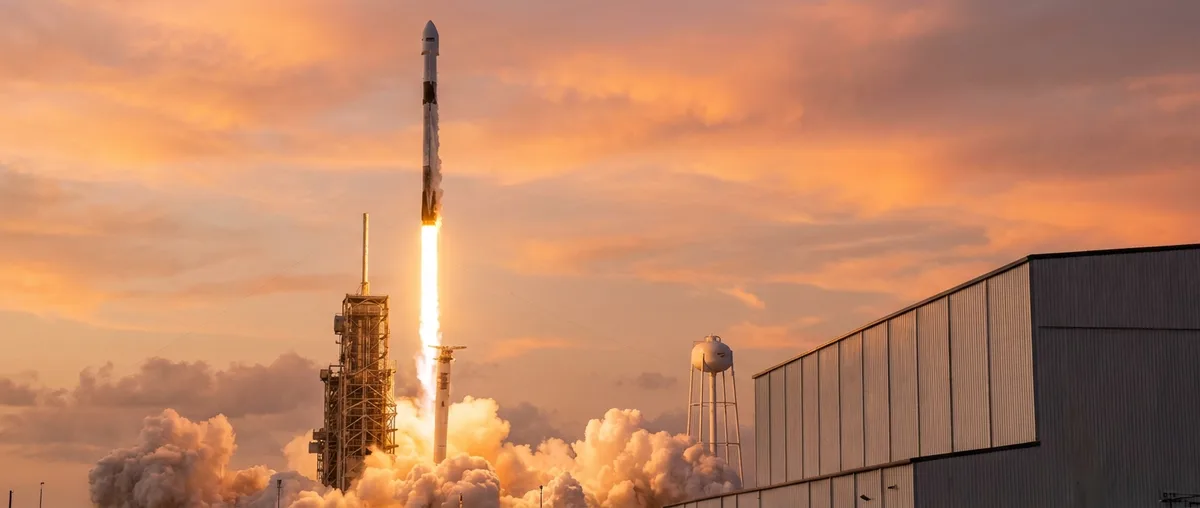
A SpaceX Falcon 9 rocket lifted off from Space Launch Complex 40 at Cape Canaveral Air Force Station at 12:17 a.m. Tuesday, delivering 52 Starlink satellites into low Earth orbit. The mission marks the 23rd Starlink launch of 2024 and brings the constellation to over 5,000 active satellites, according to SpaceX. The flight reused a Falcon 9 booster for its 12th mission, a key factor in reducing costs for the satellite internet project.
The launch adds to growing speculation about SpaceX’s valuation, which secondary market sources now estimate at $1.75 trillion. That figure, if accurate, would make SpaceX the most valuable private company in the world, surpassing even tech giants like Amazon and Apple. The valuation hinges on SpaceX’s ability to sustain rapid Starlink deployments, maintain reusable rocket technology, and advance its long-term goals including Mars colonization.
SpaceX has flown Falcon 9 boosters on 20 or more reuse cycles, drastically cutting the cost per launch. Each Starlink mission benefits from this reusability, making satellite deployments more economical. Investors see Starlink as a potential $300 billion business if it achieves global broadband coverage, particularly in rural and developing regions. The company has also secured contracts with NASA and the U.S. military for crew and cargo missions, further solidifying its financial outlook.
The Starlink constellation is expanding rapidly, with plans to launch thousands more satellites in coming years. SpaceX aims to deploy 30,000 satellites by 2027, which would provide broadband coverage to every corner of the globe. The company has faced regulatory scrutiny over spectrum usage and potential interference with astronomical observations, but continues to push forward with its expansion.
Local observers in Brevard County note the frequent SpaceX launches as a boon to the area’s economy, creating jobs and attracting aerospace-related businesses. However, concerns about noise, light pollution, and environmental impacts persist. SpaceX has not commented publicly on the $1.75 trillion valuation, but its track record of successful missions and technological innovation continues to draw investor interest.