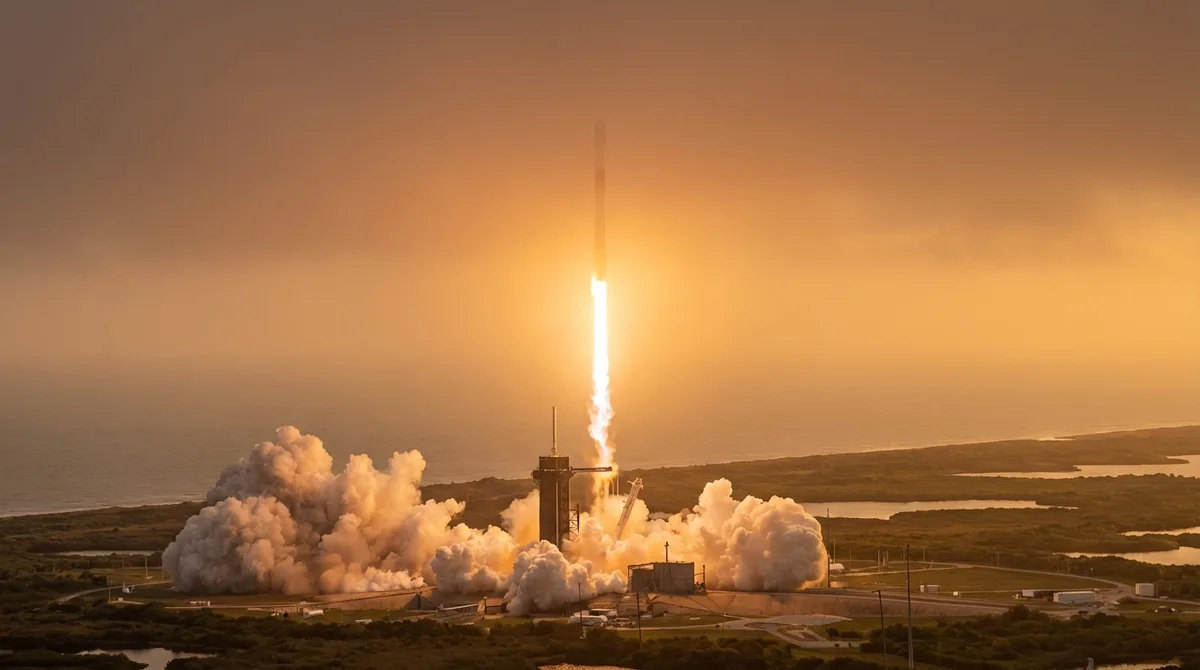
SpaceX launched 53 Starlink satellites from Cape Canaveral Space Force Station at 1:13 a.m. Monday, marking the company's 23rd mission of the year. The Falcon 9 rocket lifted off from Launch Complex 39A, a site also used by NASA for Apollo and Space Shuttle missions. The satellites will expand broadband coverage to rural areas across the globe.
The launch was broadcast live on SpaceX's website and social media channels, with the company's founder Elon Musk commenting on Twitter that the mission was 'going well.' This flight reused a first-stage booster from a May 2023 mission, highlighting SpaceX's focus on sustainable space travel. The second stage carried the satellites into orbit before separating and deploying them into their target altitude.
Brevard County officials confirmed the launch was visible from parts of the Space Coast, with residents reporting a bright streak across the sky. The Kennedy Space Center's visitor complex offered live viewing for the public, though attendance was limited due to early hour. Local businesses near the launch site reported minimal disruption, with traffic returning to normal within 30 minutes of liftoff.
This mission continues SpaceX's contract with NASA to maintain low Earth orbit infrastructure, a deal worth $1.5 billion over five years. The company plans another Starlink launch from the same site in late September, pending weather conditions. The Space Coast has hosted 147 commercial launches since 2010, making it the busiest spaceport in the world by that measure.
The satellites will join over 4,000 others in SpaceX's constellation, with the company aiming to provide internet service to 1 billion people by 2025. Engineers at SpaceX's nearby Boca Chica facility in Texas are working on the next generation of Starlink satellites, expected to debut in 2024.