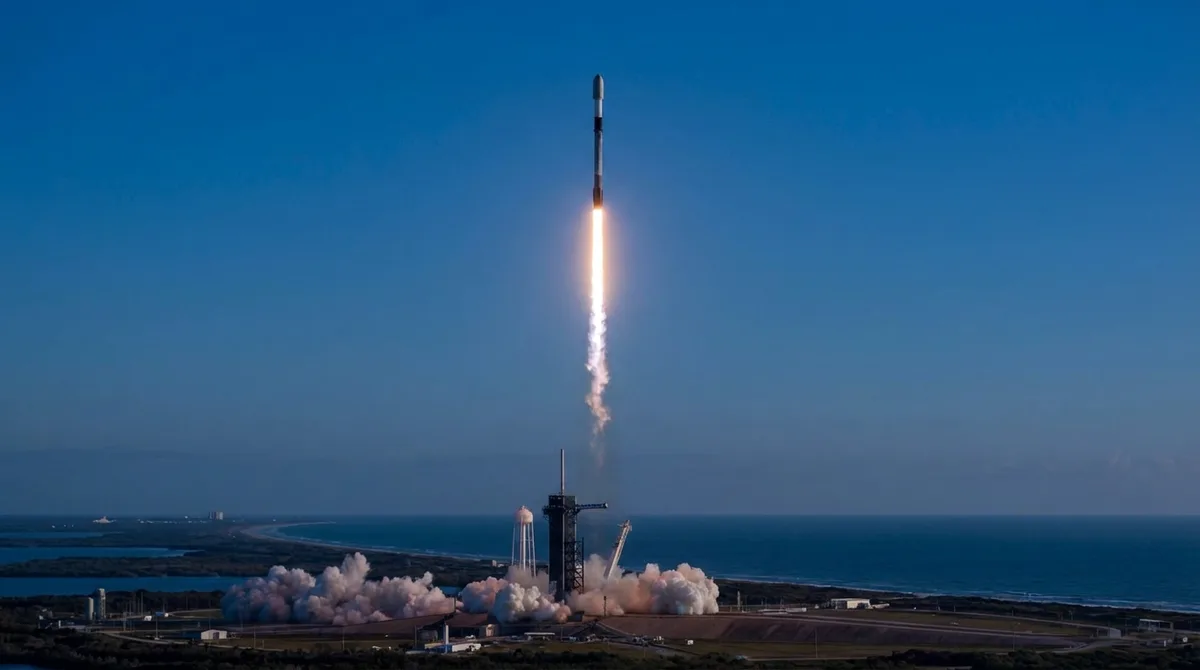
A SpaceX Falcon 9 rocket launched from Cape Canaveral Space Force Station’s Space Launch Complex 40 on Tuesday, Feb. 24, 2026, carrying 29 Starlink satellites into orbit. The rocket lifted off at 6:04 p.m. and made a successful landing of its first-stage booster on the droneship Just Read the Instructions. This was the 13th launch from the Space Coast in 2026, with 12 of those missions coming from SpaceX. The launch marked the 10th flight of the Falcon 9 booster used for the mission.
The successful Starlink mission proceeded despite cold weather conditions that affected NASA’s Artemis II plans. Engineers at Kennedy Space Center had to delay rolling back the Artemis II rocket from Launch Pad 39-B to the Vehicle Assembly Building until at least Wednesday due to high winds and temperatures. The delay pushed back preparations for the Artemis II lunar flyby mission, which is now expected to be rescheduled for no earlier than April.
NASA’s Space Launch System (SLS) rocket, topped with the Orion spacecraft, remains at Launch Pad 39-B. The rollback was initially planned for Tuesday but was halted by weather. The Artemis II mission, set to carry four astronauts on a test flight around the moon, has faced multiple delays since its 2022 launch date.
Other launch activity in 2026 includes a January mission by United Launch Alliance’s Vulcan rocket for a national security payload. Blue Origin has not yet launched its New Glenn rocket this year but is preparing for its third flight. SpaceX continues to dominate the Space Coast’s launch schedule, with 12 of the 13 launches so far in 2026.
The Artemis II delay highlights the challenges of operating in Florida’s unpredictable weather. NASA officials have not provided a firm new date for the rollback but said teams will work to minimize further delays. Meanwhile, SpaceX’s Starlink mission proceeded without incident, adding to the company’s growing constellation of internet satellites.