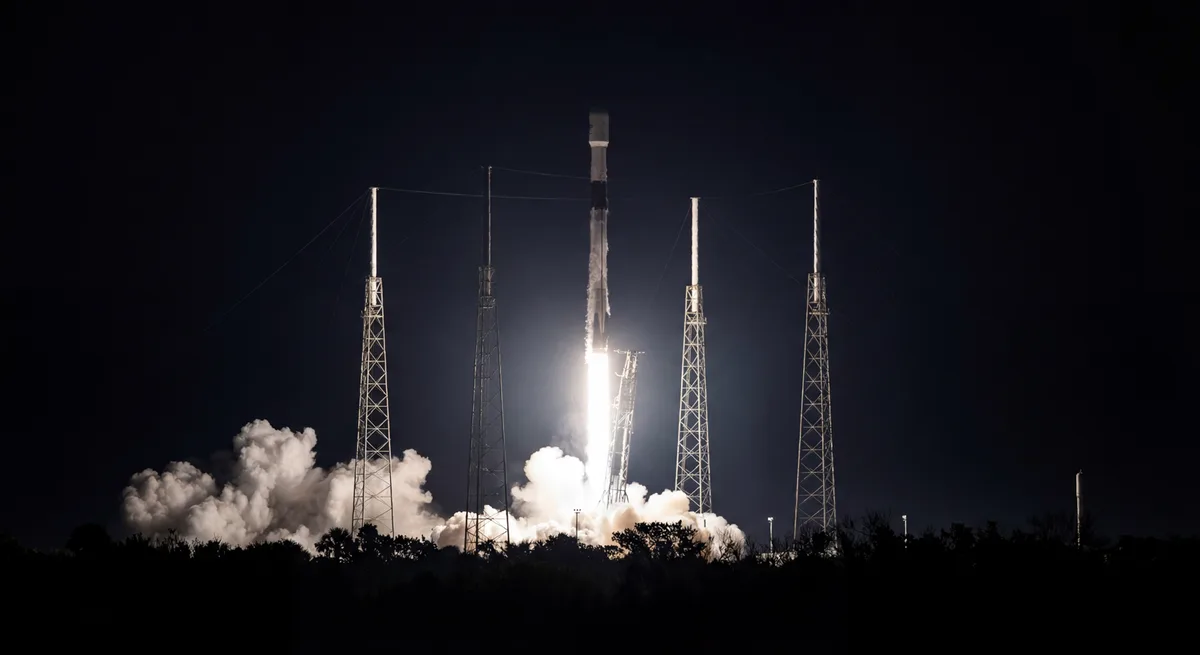
A SpaceX Falcon 9 rocket lifted off from Launch Complex 40 at Cape Canaveral Space Force Station at 10:47 p.m. EST Saturday, Feb. 21, carrying 29 Starlink satellites into low-Earth orbit. The mission marked the sixth Starlink launch of 2026 and the 104th overall for the satellite internet project. The rocket’s first stage returned to Cape Canaveral’s Landing Zone 1, completing its 12th flight. SpaceX officials did not immediately comment on the mission, but the launch was visible across much of Florida’s east coast. The satellites are part of SpaceX’s effort to expand global broadband coverage, with the company aiming to deploy over 4,000 Starlink satellites by 2027. This was the second Starlink launch from Cape Canaveral in 2026, following a successful mission in January. The launch window for Starlink 6-104 was narrow, requiring precise timing to avoid adverse weather conditions. The mission used a Falcon 9 rocket that had previously flown in 2024, highlighting SpaceX’s focus on reusing hardware to reduce costs. Photos from the launch were captured by Florida Today reporters Craig Bailey, Tim Shortt, and Malcolm Denemark, showing the rocket’s ascent and the bright plume of exhaust against the night sky. The launch added to the growing number of commercial and government missions at Cape Canaveral, which remains a key hub for U.S. space operations. SpaceX has conducted over 200 launches from the Florida Space Coast since 2010, with Starlink missions making up a significant portion of that total. The satellites will be deployed into a 550-kilometer orbit, where they will begin transmitting data to ground stations and user terminals. The mission’s success underscores SpaceX’s role in shaping the future of global communications, though challenges remain in ensuring equitable access to the service.
Space & Tech
SpaceX launches Starlink 6-104 mission from Cape Canaveral
A SpaceX Falcon 9 rocket launched 29 Starlink satellites into low-Earth orbit from Cape Canaveral on Feb. 21, 2026.
Source: Sarasota Herald-Tribune