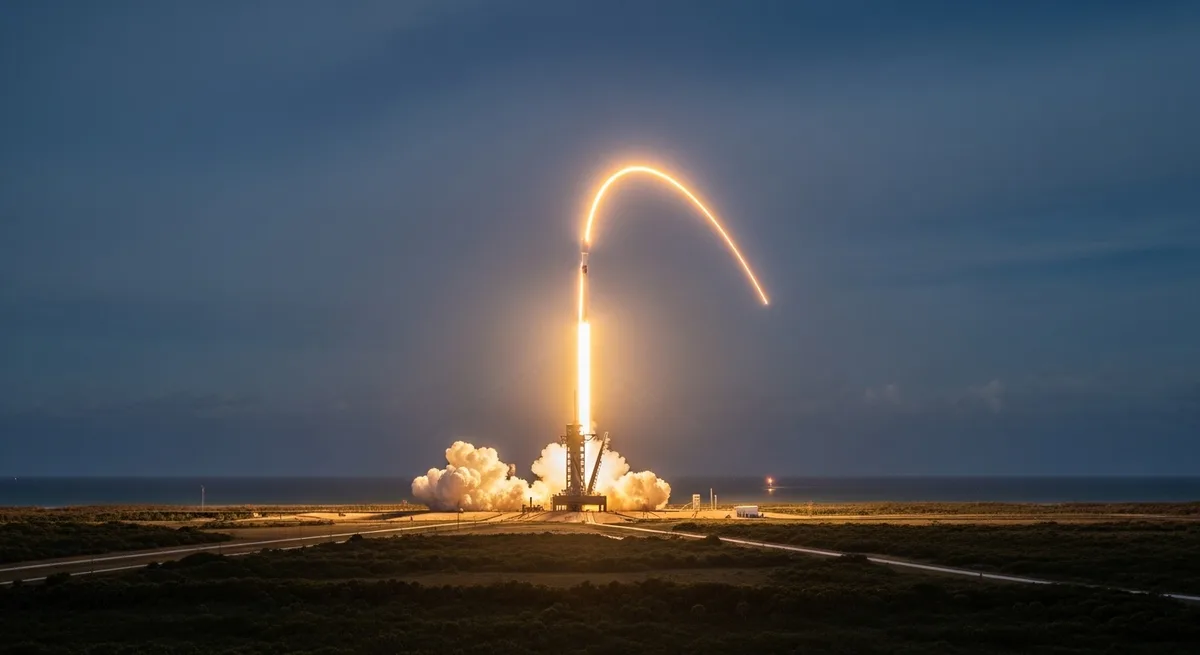
SpaceX launched a 15,400-pound SiriusXM satellite into orbit from Cape Canaveral Space Force Station on Sunday night, June 28, 2025. The Falcon 9 rocket lifted off at 10:25 p.m. EDT, carrying the SXM-11 spacecraft to an elliptical geosynchronous transfer orbit. The satellite deployed 34.5 minutes after liftoff, as planned. SpaceX confirmed the first stage of the rocket landed successfully on the drone ship 'A Shortfall of Gravitas' in the Atlantic Ocean about 8.5 minutes after launch. This was the 17th flight for the booster, designated B1085, which previously supported missions including Crew 9, Fram 2, and multiple Starlink launches. The upper stage of the Falcon 9 continues to carry SXM-11 to its final orbit, where it will join SiriusXM's existing fleet of seven satellites. The company has launched four of its satellites so far, with SXM-8 in June 2021, SXM-9 in December 2024, and SXM-10 in June 2025. SpaceX has completed 76 Falcon 9 missions in 2026, with 80% focused on Starlink broadband satellites. The SXM-11 satellite will now circularize its orbit and expand SiriusXM's coverage. The mission follows a successful launch timeline, with no delays reported. SpaceX's reuse of the B1085 booster highlights the company's ongoing efforts to reduce costs and increase launch frequency. The satellite will enhance SiriusXM's services, which currently rely on seven spacecraft. The launch occurred during a busy period for SpaceX, which has prioritized both commercial and government contracts in 2026.
Space & Tech
SpaceX launches SiriusXM satellite from Cape Canaveral in 15,400-pound mission
SpaceX launched a 15,400-pound SiriusXM satellite into orbit from Cape Canaveral on June 28, 2025, marking the 17th flight of the Falcon 9 booster used.
Source: Space