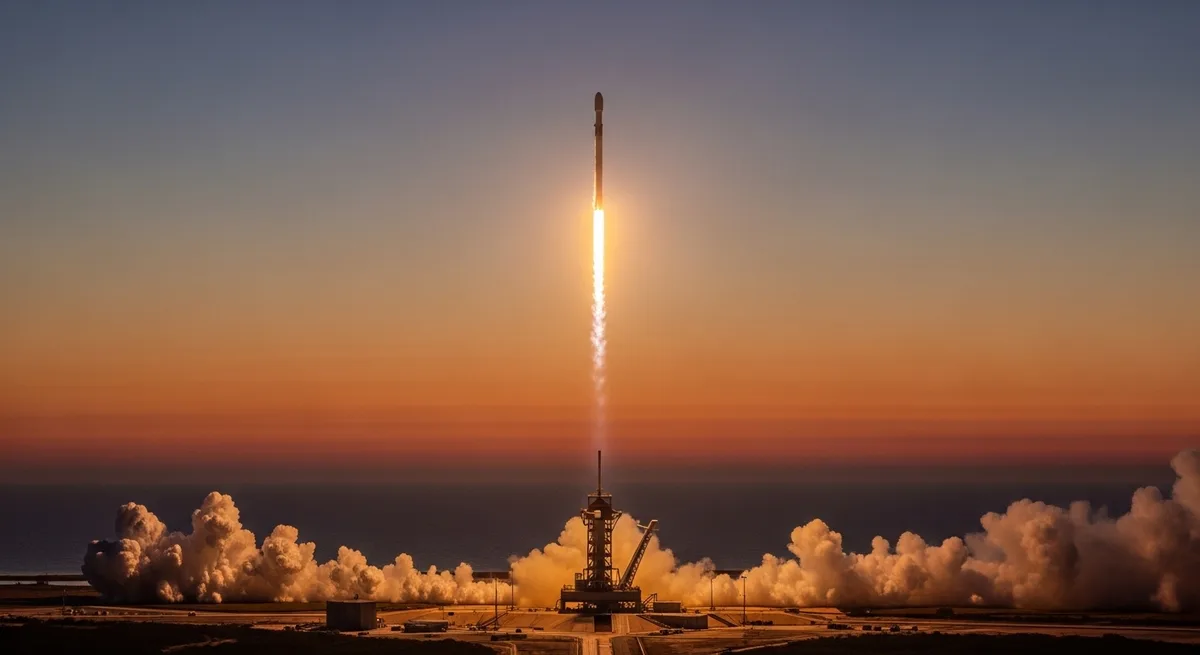
A SpaceX Falcon 9 rocket lifted off at 10:25 p.m. EDT Sunday from Space Launch Complex 40 at Cape Canaveral Space Force Station carrying SiriusXM’s SXM-11 satellite. The mission aimed to replace two older satellites in geostationary Earth orbit, with liftoff occurring at the start of a four-hour window. The rocket followed an easterly trajectory after clearing the launch pad. Weather forecasts from the 45th Weather Squadron showed an 80% chance of favorable conditions at launch, rising to 90% as the window progressed. Forecasters noted risks from cumulus and anvil clouds but expected remnant storms to diminish by night’s end.
The Falcon 9 booster, designated B1085, made its 17th flight. It previously carried NASA’s Crew-9 mission, the U.S. Space Force’s RRT-1, Firefly Aerospace’s Blue Ghost Mission 1, and nine Starlink satellites. The booster landed 8.5 minutes after liftoff on the drone ship ‘A Shortfall of Gravitas’ in the Atlantic Ocean, marking its 158th successful landing. This tied B1085 with the retired ‘Just Read the Instructions,’ now repurposed for Starship operations.
SiriusXM’s SXM-11 satellite is part of a broader effort to refresh the company’s constellation, which provides satellite radio services across North America. The satellite will join existing assets in geosynchronous transfer orbit before moving to its final position. SpaceX’s reuse of boosters has become a routine part of missions, with B1085’s flight history including launches for commercial and government customers.
The launch followed a week of delays due to weather concerns, with forecasters monitoring shifting storm patterns along the Florida coast. Meteorologists noted that weak upper-level winds would influence storm movement, potentially keeping clouds closer to the coast later in the night. Despite these challenges, the mission proceeded as planned, with no reported issues during ascent or landing.
SpaceX’s continued use of Cape Canaveral for commercial launches highlights the spaceport’s role in supporting both government and private-sector missions. The SXM-11 deployment underscores the growing reliance on reusable rocket technology to sustain frequent satellite deployments, a trend expected to continue as companies expand global communication networks.