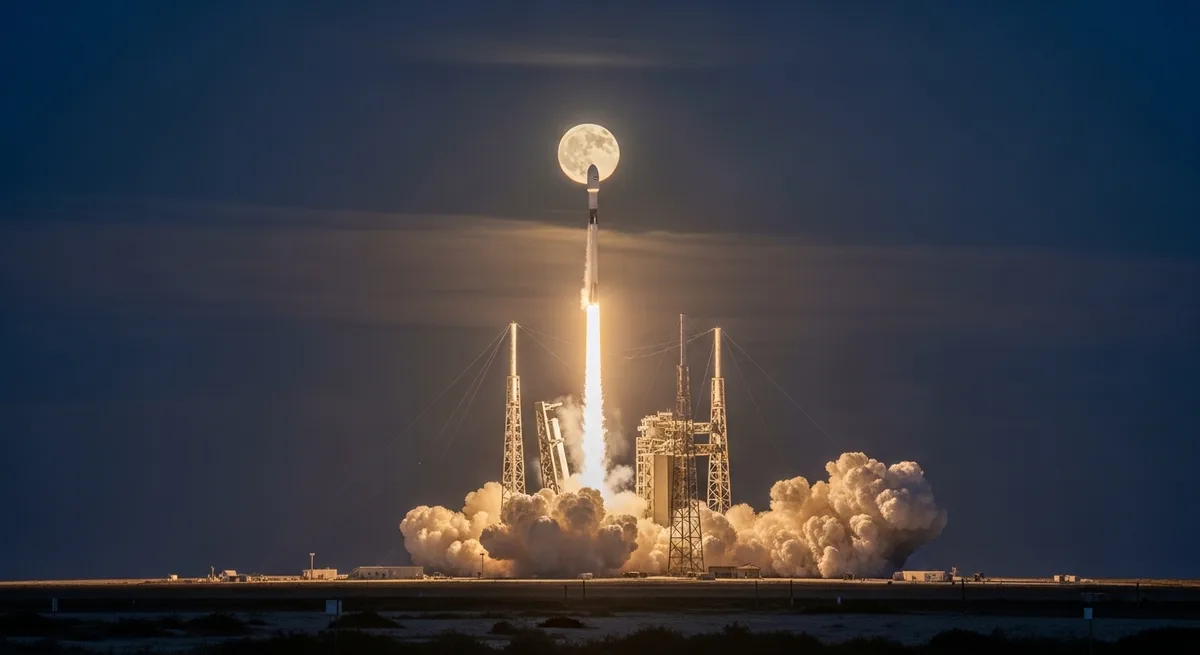
A SpaceX Falcon 9 rocket lifted off from Cape Canaveral Space Force Station’s Space Launch Complex 40 at 10:25 p.m. on Sunday, June 28, carrying the SiriusXM SXM-11 satellite into orbit under a nearly full moon. The mission marked the final launch from Florida in the first half of 2026 and the 43rd overall on the Space Coast this year. SpaceX’s first-stage booster, which had flown 16 times before, landed on the droneship A Shortfall of Gravitas in the Atlantic Ocean.
The launch came as the Space Coast’s annual launch pace has slowed significantly compared to recent years. Only 43 launches have occurred from the region so far in 2026, with 37 of them conducted by SpaceX. This is far below the record 109 orbital launches in 2025 and 93 in 2024. Space Launch Delta 45, which manages the Eastern Range, had aimed to surpass 100 launches this year but is now projected to reach around 80.
SpaceX’s decision to pause Falcon 9 launches from Kennedy Space Center’s Launch Pad 39-A has contributed to the decline. The company previously used the pad for multiple missions but has shifted operations to other sites. Industry observers note that the slowdown also reflects broader challenges in securing launch slots and coordinating with government and commercial clients.
Despite the reduced pace, the June 28 mission was a routine success for SpaceX. The Falcon 9’s first stage has now landed on the A Shortfall of Gravitas droneship 17 times, demonstrating the company’s continued focus on reusability. The SXM-11 satellite is expected to join SiriusXM’s constellation, providing expanded satellite radio coverage. No major delays or complications were reported during the flight, which followed a nominal ascent and separation sequence.
Local officials and aerospace workers say the slower rhythm is temporary. SpaceX has not ruled out resuming launches from Pad 39-A in 2027, and other providers remain active on the Space Coast. However, the shift highlights the evolving dynamics of the region’s space industry as companies balance operational demands with long-term planning.