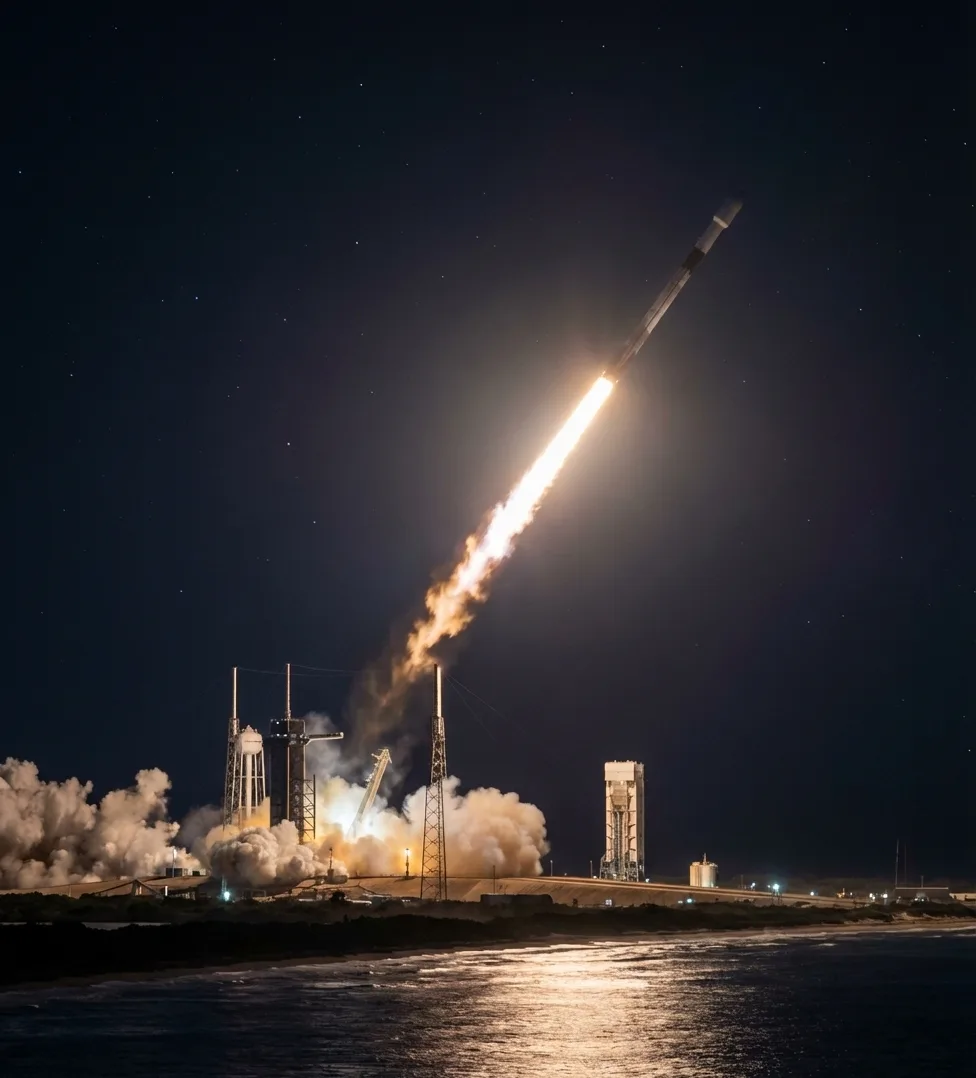
A SpaceX Falcon 9 rocket lifted off from Launch Complex 39A at Cape Canaveral at 12:19 a.m. on Tuesday, March 10, 2026, carrying a commercial satellite to orbit. The launch followed an hour-long delay due to weather, but proceeded without incident. Residents across Brevard County reported seeing the rocket’s bright plume illuminating the night sky as it ascended. SpaceX has conducted 14 launches from the Florida Space Coast this year alone, according to company records.
The rocket’s first stage landed successfully at Cape Canaveral’s Landing Zone 1, a routine part of SpaceX’s reusable rocket system. The satellite’s mission is not publicly disclosed, but commercial launches from the area have increased by 22% compared to 2025, per data from the Florida Space Coast Economic Development Council. The delay was confirmed by SpaceX officials via a live stream, which showed engineers monitoring conditions before giving the go-ahead for launch.
This mission marks SpaceX’s fifth launch from Launch Complex 39A since taking over the site from NASA in 2017. The facility, originally built for Apollo and Space Shuttle missions, now hosts both SpaceX and United Launch Alliance rockets. Nearby, the Kennedy Space Center’s visitor complex remained open, with staff noting no disruptions to public tours.
SpaceX’s frequent launches from the Space Coast have made the area a global hub for commercial space activity. The company’s president, Gwynne Shotwell, spoke at a Brevard County business forum last month, stating the firm aims to double its annual launch rate by 2028. The Falcon 9’s success continues a trend of increasing private sector involvement in spaceflight, with SpaceX now responsible for 60% of all satellite deployments from U.S. launch sites.
Residents near the launch site described the experience as “spectacular” but noted the noise from the rocket’s ascent. Local authorities reminded residents to stay clear of restricted areas during launches, though no safety incidents were reported. The satellite is expected to operate in low Earth orbit for at least five years, supporting unspecified commercial applications.