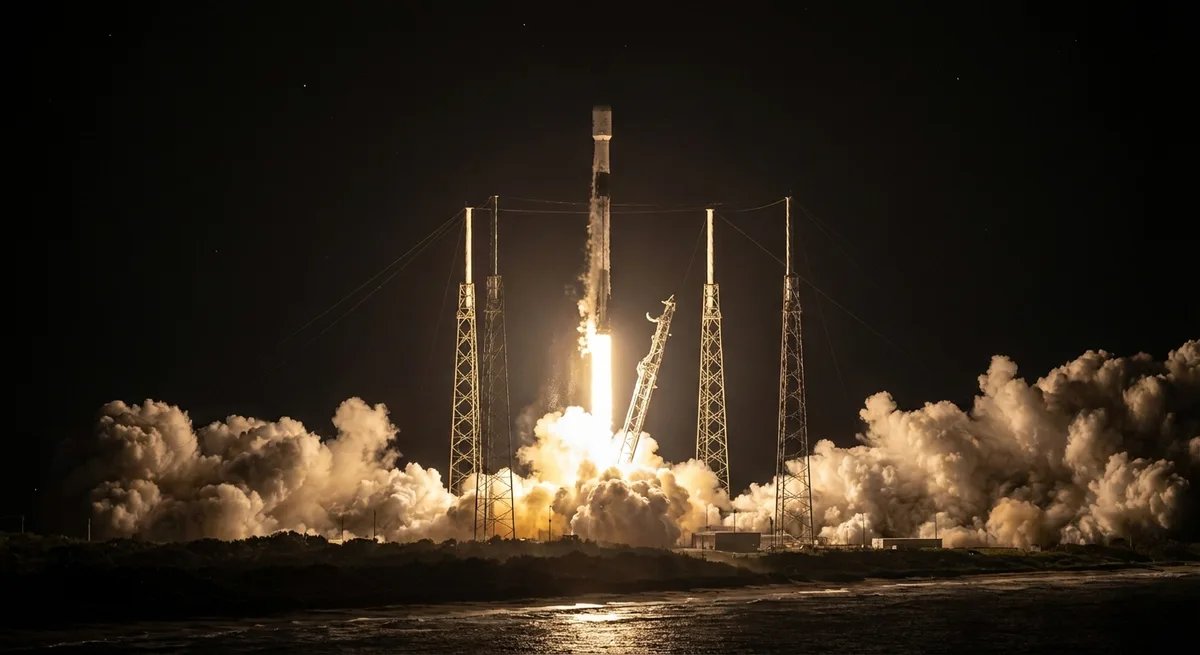
A SpaceX Falcon 9 rocket lifted off Tuesday from Cape Canaveral Space Force Station, carrying 29 Starlink satellites toward low-Earth orbit. The launch marked the latest mission in SpaceX’s effort to expand global broadband coverage through its satellite internet constellation. The rocket’s first stage successfully landed at a designated landing zone near the launch site, a routine part of SpaceX’s reusable rocket operations.
The Starlink satellites are part of a larger project aiming to deploy thousands of internet-beaming satellites to provide broadband access in remote and underserved areas. SpaceX has already launched over 3,000 Starlink satellites, with plans to expand the network to more than 40,000 satellites in the coming years. The mission took place from Launch Complex 39A, a historic site previously used for NASA’s Apollo and Space Shuttle programs.
This was the second Starlink mission launched from Florida in 2024, following a similar flight in January. SpaceX frequently uses Florida’s east coast for launches due to its proximity to the equator, which provides an efficiency boost for orbital missions. The company’s launches have become a regular sight for residents and visitors along the Space Coast, though they sometimes draw complaints from nearby communities about noise and light pollution.
SpaceX’s Starlink program has faced regulatory scrutiny and legal challenges from competitors and government agencies. Despite this, the company continues to push forward with its deployment goals. The latest mission is expected to enhance internet coverage in regions where traditional infrastructure is limited, though details about specific service improvements were not immediately available.