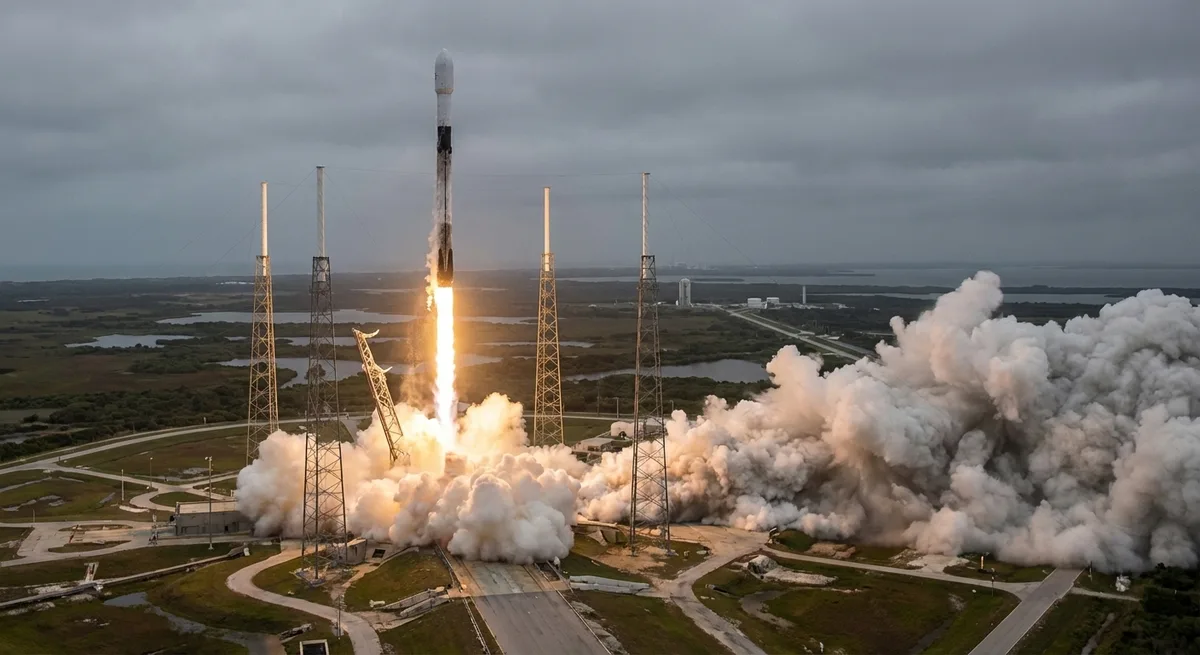
SpaceX launched 29 Starlink satellites from Cape Canaveral Space Force Station on March 18, 2026, despite a 25-40% chance of weather-related delays. The Falcon 9 rocket lifted off at 10:20 a.m. ET from Space Launch Complex 40, narrowly avoiding thick cloud layers that had raised concerns before the launch. The four-hour window opened at 6:35 a.m. ET, but delays were avoided after the 45th Weather Squadron assessed conditions. The mission, designated Starlink 10-33, is part of SpaceX’s ongoing effort to expand global broadband coverage.
The launch marked the 26th flight of the Falcon 9’s first-stage booster, B1077, which previously supported missions including Crew-5 and multiple Starlink deployments. After stage separation, the booster landed on the droneship Just Read the Instructions in the Atlantic Ocean, a routine operation for the reusable rocket. The 29 satellites will join thousands already in low-Earth orbit, providing internet services to underserved regions worldwide.
Weather conditions had initially posed a challenge, with cumulus cloud rules and thick cloud layers complicating the launch window. However, the 45th Weather Squadron’s final assessment cleared the way. SpaceX’s launch team confirmed the mission proceeded without incident, though the cloud cover remained a factor throughout the countdown. This was the first Starlink mission since February and the 10th of 2026, continuing SpaceX’s pace of regular satellite deployments.
The satellites are part of Starlink’s constellation, which aims to deliver high-speed internet to remote areas. Dr. Jonathan, a researcher at the Harvard-Smithsonian Center for Astrophysics, has previously commented on the project’s impact on global connectivity, though specific details about this mission’s scientific goals were not disclosed. SpaceX did not immediately release data on the satellites’ orbital parameters or deployment timeline.