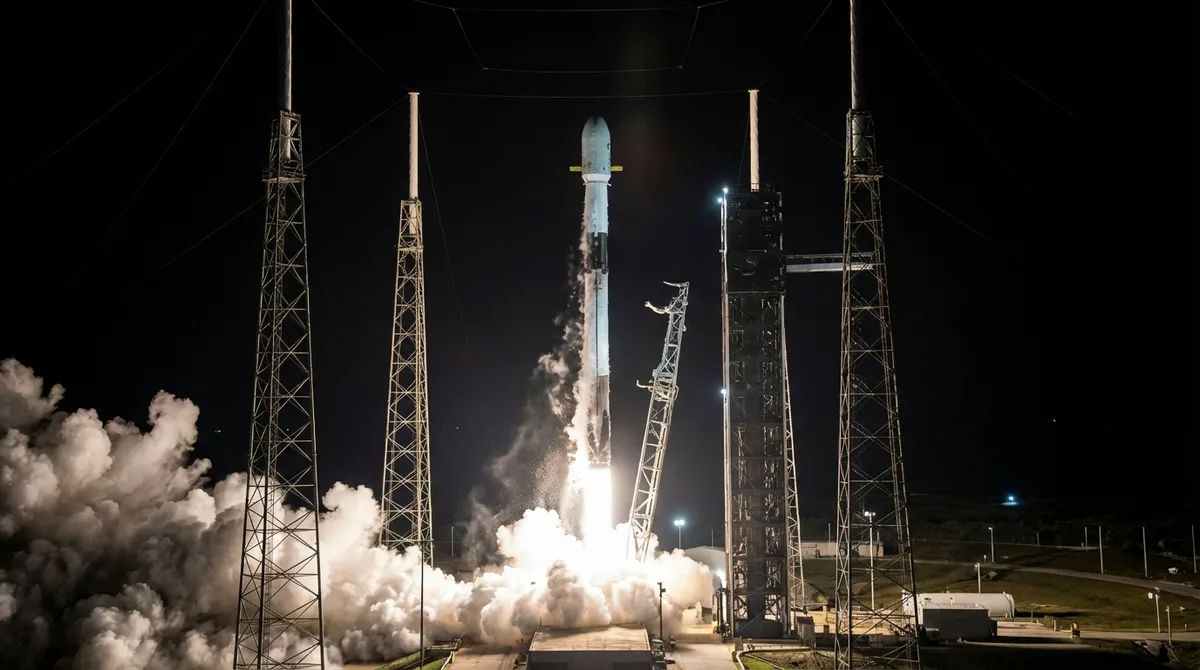
SpaceX launched 28 Starlink satellites into low-Earth orbit from Cape Canaveral on Saturday, February 21, 2026. The Falcon 9 rocket lifted off from Space Launch Complex 40 (SLC-40) at 10:46 p.m. EST, marking the 33rd flight of the first-stage booster used for this mission. The booster had previously supported launches including Crew-3, Crew-4, and multiple Starlink missions, according to SpaceX.
The rocket’s first stage landed on the droneship A Shortfall of Gravitas, which was positioned in the Atlantic Ocean. The launch followed a standard procedure, with stage separation and landing occurring as expected. SpaceX provided a live webcast of the mission, which began five minutes before liftoff.
This mission added to SpaceX’s growing constellation of Starlink satellites, which aim to provide broadband internet to underserved regions worldwide. The company has conducted numerous launches from Brevard County, leveraging the infrastructure at Cape Canaveral and nearby launch sites.
The Falcon 9’s reusability is a key factor in SpaceX’s cost efficiency, with this particular booster having flown multiple high-profile missions. The successful launch comes as SpaceX continues to increase the frequency of its Starlink deployments, with plans for more launches in the coming months.