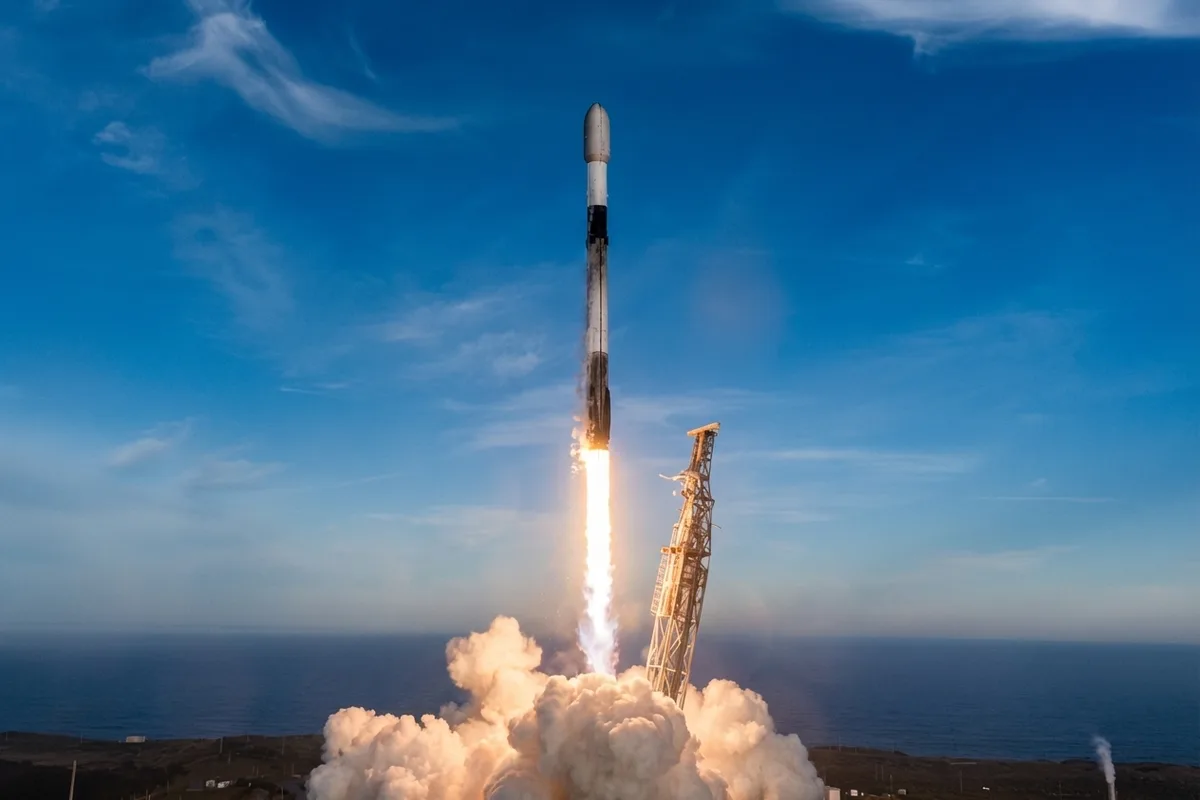
A SpaceX Falcon 9 rocket lifted off from Space Launch Complex 4 East at Vandenberg Space Force Base at 6:57:59 a.m. PDT on March 13, 2026, carrying 25 Starlink satellites. The launch, part of the Starlink 17-31 mission, was the company’s 25th mission supporting its low Earth orbit constellation in 2026. The Falcon 9 first stage booster, designated B1071, was used for the flight. This was the booster’s 32nd mission since its first launch in 2020, having previously supported NASA’s SWOT mission, five National Reconnaissance Office missions, and five SmallSat rideshare missions.
The rocket’s first stage landed on the drone ship ‘Of Course I Still Love You’ in the Pacific Ocean about 8.5 minutes after liftoff. This marked the 183rd landing on the vessel and the 584th booster landing in SpaceX’s history. The Starlink satellites deployed about an hour after launch, bringing the total number of Starlink satellites launched in 2026 to 674.
The mission used the Starlink V2 Mini satellites, which are part of SpaceX’s next-generation broadband internet constellation. The Falcon 9 second stage carried the satellites to low Earth orbit, where they will expand global internet coverage. SpaceX has been launching Starlink satellites regularly since 2019, with the goal of providing broadband internet to underserved regions worldwide.
The launch was the first from Vandenberg Space Force Base this year and the second overall for SpaceX in 2026. The company has previously launched Starlink missions from Cape Canaveral Space Force Station in Florida. SpaceX’s Starlink constellation is expected to reach over 4,000 satellites by the end of 2026, with plans to expand further in the coming years.