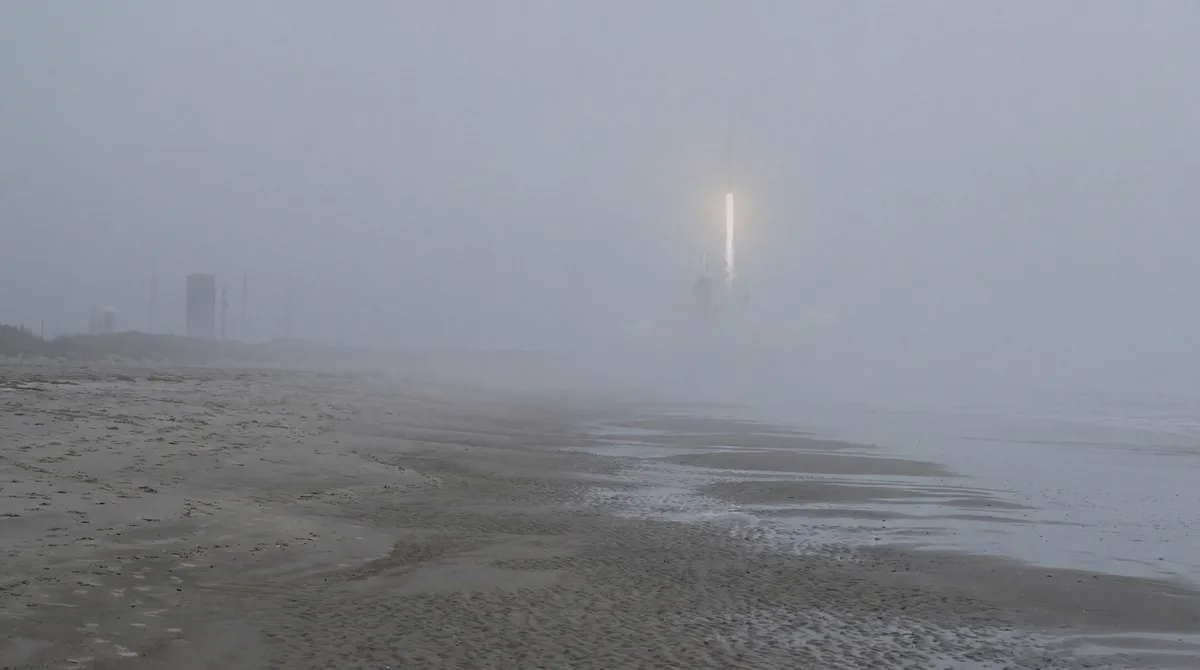
A SpaceX Falcon 9 rocket lifted off from Cape Canaveral Space Force Station’s Launch Complex 40 at 7:16 a.m. ET on Friday, Feb. 27, 2026, deploying 29 Starlink internet satellites into low-Earth orbit. The mission marked the rocket’s 30th flight, with the first-stage booster landing successfully on the SpaceX drone ship A Shortfall of Gravitas in the Atlantic Ocean shortly after liftoff. No sonic booms were reported in Brevard County during the launch. The Space Force’s 45th Weather Squadron had given the mission an 85% chance of favorable weather, though scattered showers and an isolated thunderstorm were expected later in the day as a cold front moved through the area. SpaceX targeted the launch after delays caused by fog at the Cape earlier in the week. The Falcon 9’s first-stage booster, which had previously supported multiple Starlink missions, completed its 30th flight during the mission, a milestone for SpaceX’s reusable rocket technology. The rocket’s second stage will continue to orbit, where the satellites will begin deploying to expand SpaceX’s global broadband network. The launch occurred amid ongoing efforts to boost Starlink’s coverage, with the company aiming to deploy thousands of satellites to provide internet access worldwide. Meteorologists predicted the cold front would bring cooler temperatures and scattered rain to the Space Coast later Friday, but the launch window remained open. SpaceX’s next Starlink mission is scheduled for March 5, 2026, from the same launch site. The company has conducted over 100 Starlink launches since 2019, with each mission contributing to its goal of creating a near-global broadband constellation.
Space & Tech
SpaceX Falcon 9 successfully launches Starlink satellites from Cape Canaveral
A SpaceX Falcon 9 rocket launched 29 Starlink satellites into orbit from Cape Canaveral on Friday, Feb. 27, 2026, with the first-stage booster completing its 30th flight.
Source: Treasure Coast News