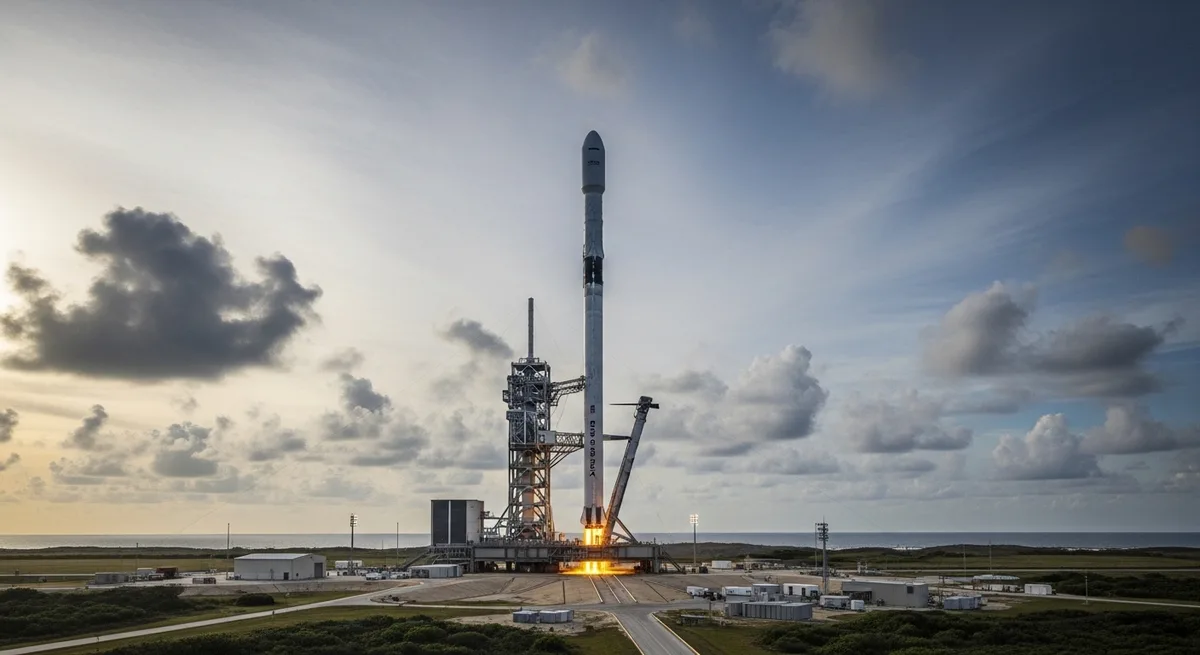
A SpaceX Falcon 9 rocket landed successfully on the drone ship A Shortfall of Gravitas in the Atlantic Ocean at 2:14 p.m. ET on May 1, 2026, marking the end of the Starlink 10-38 mission. The 230-foot-tall rocket lifted off from Launch Complex 40 at Cape Canaveral Space Force Station at 2:06 p.m. ET, deploying 29 Starlink broadband satellites into low-Earth orbit. This was the 31st flight of the Falcon 9 booster, which will be reused for future missions.
The launch took place under mostly sunny skies, though the Space Force’s 45th Weather Squadron had earlier reported an 80% chance of favorable weather, with cumulus clouds and thick cloud layers posing potential risks. Unlike SpaceX’s Falcon Heavy mission the previous week, which caused sonic booms over Central Florida, the Falcon 9’s first-stage booster did not produce any such disturbances during its descent.
The mission followed a tightly scheduled timeline, with the rocket ascending northeast from the launch site before the satellites were released into orbit. SpaceX has been using the A Shortfall of Gravitas drone ship as a landing target for Falcon 9 boosters since 2021, and this landing marked the 12th such recovery for the vessel.
This launch was the 12th of the year for SpaceX from Cape Canaveral, with the company continuing to expand its Starlink network. The satellites deployed during the mission will provide broadband internet to underserved regions, part of SpaceX’s ongoing effort to connect global populations. No further details about the mission’s specific payload or technical data were released in the immediate aftermath of the landing.