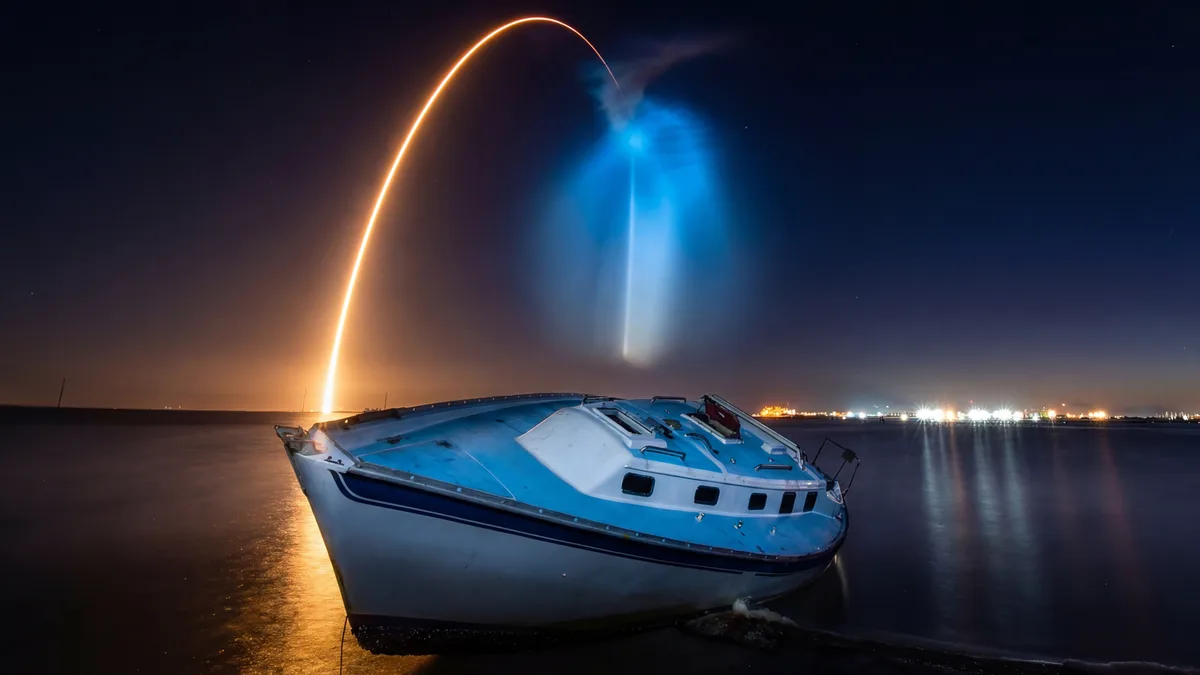
A SpaceX Falcon 9 rocket lifted off from Cape Canaveral Space Force Station on March 4, 2026, at 5:52 a.m. ET, carrying 29 Starlink satellites into low-Earth orbit. The launch produced a bright, 'jellyfish-like' vapor trail visible to residents across South Carolina, including areas in the Midlands, Lowcountry, Myrtle Beach, and Charleston. The mission marked SpaceX's 16th orbital rocket launch of 2026 from Cape Canaveral and its 22nd overall this year. SpaceX has deployed 566 Starlink satellites so far in 2026 as part of its effort to expand global satellite internet coverage.
The Falcon 9 rocket, which stands 229.6 feet tall and 3.7 meters in diameter, is a two-stage vehicle designed for reusable launches. According to SpaceflightNow, the mission aims to enhance high-speed, low-latency internet access, particularly in remote areas, and support direct-to-cell communication. SpaceX, founded by Elon Musk, has conducted numerous launches from Florida's East Coast, with visibility often extending to parts of South Carolina due to the rocket's trajectory.
Residents reported seeing the rocket's ascent and the vapor trail as it traveled through the atmosphere. The launch is part of SpaceX's ongoing work to expand its Starlink constellation, which now includes over 5,000 satellites in orbit. The company's 2026 missions have focused on increasing broadband internet capacity and improving global connectivity. This particular flight was the 16th from Cape Canaveral Space Force Station and the 22nd overall for SpaceX in 2026.
SpaceX has not announced the next Falcon 9 launch date for South Carolina visibility, but frequent launches from Florida's Space Coast mean similar events are likely in the coming months. The company continues to prioritize expanding its satellite network while refining reusable rocket technology. For residents hoping to spot future launches, clear skies and early morning hours offer the best chance to see the Falcon 9's ascent and its distinctive vapor trail.