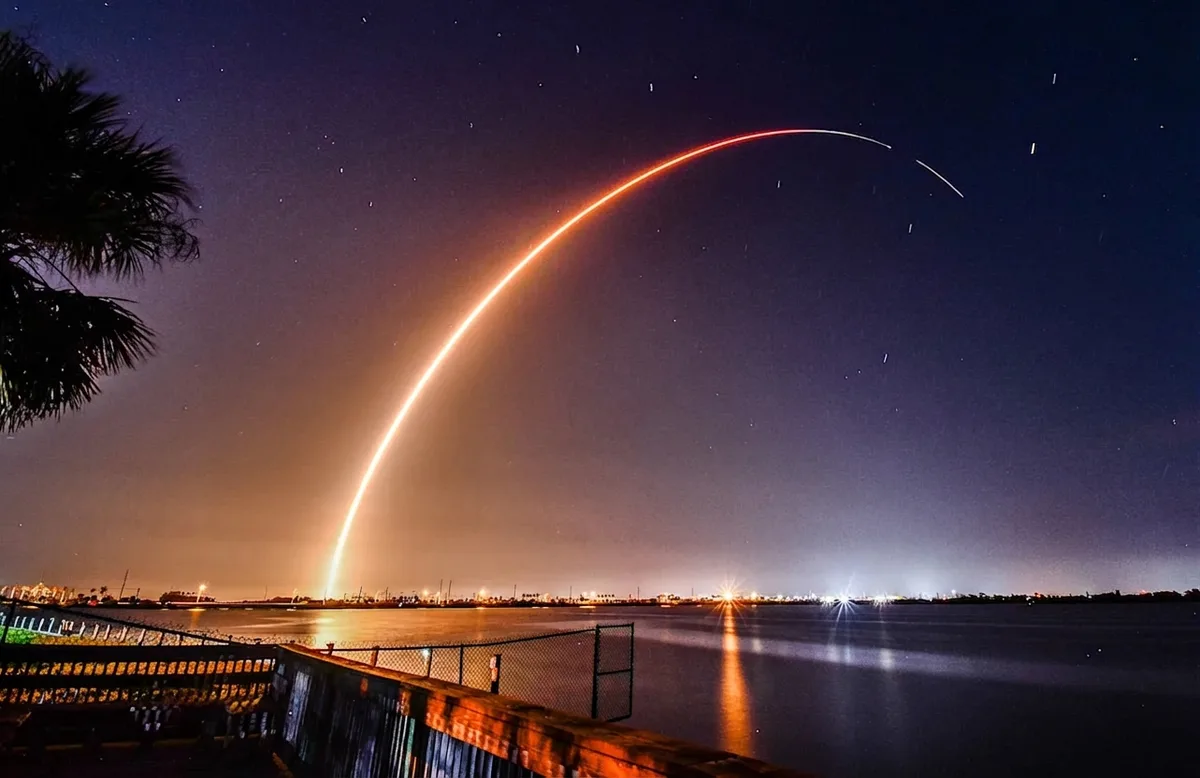
A SpaceX Falcon 9 rocket lifted off from Launch Complex 40 at Cape Canaveral Space Force Station at 12:19 a.m. Tuesday, March 10, after a one-hour delay. The mission carried the EchoStar XXV satellite, a direct broadcast satellite for DISH that will deliver high-definition TV and content to customers. The launch occurred under clear skies, with no sonic booms reported in Brevard County. The first-stage booster landed on the Just Read the Instructions drone ship in the Atlantic Ocean, marking its 14th flight.
This was the first Falcon 9 mission for EchoStar XXV, which is designed to provide DISH with expanded capacity for streaming services. The satellite will be positioned in geostationary orbit over the western United States. SpaceX officials said the mission was on track for a successful deployment, with the satellite expected to begin operations in the coming weeks.
The next SpaceX Falcon 9 launch from Florida is scheduled for no earlier than 6:00 a.m. Thursday, March 12, from the same launch complex. The mission will carry the Starlink 10-48 batch of internet satellites. The rocket will follow a northeast trajectory, potentially visible to observers north of Florida if the launch occurs before sunrise. SpaceX has until 10:00 a.m. to begin the mission, depending on weather conditions.
Residents in Brevard County who witnessed the Tuesday launch described the rocket’s brightness as similar to a fast-moving star. The mission was the 14th for the Falcon 9 booster, which has previously supported Starlink and other commercial satellite deployments. No major delays are expected for the upcoming Starlink mission, though weather monitoring will continue through Thursday.
SpaceX has conducted 100 launches from Florida since 2010, with Cape Canaveral Space Force Station serving as a primary site for commercial and government missions. The company’s next launch will be the 10th Starlink mission of 2024, continuing its efforts to expand global broadband coverage.