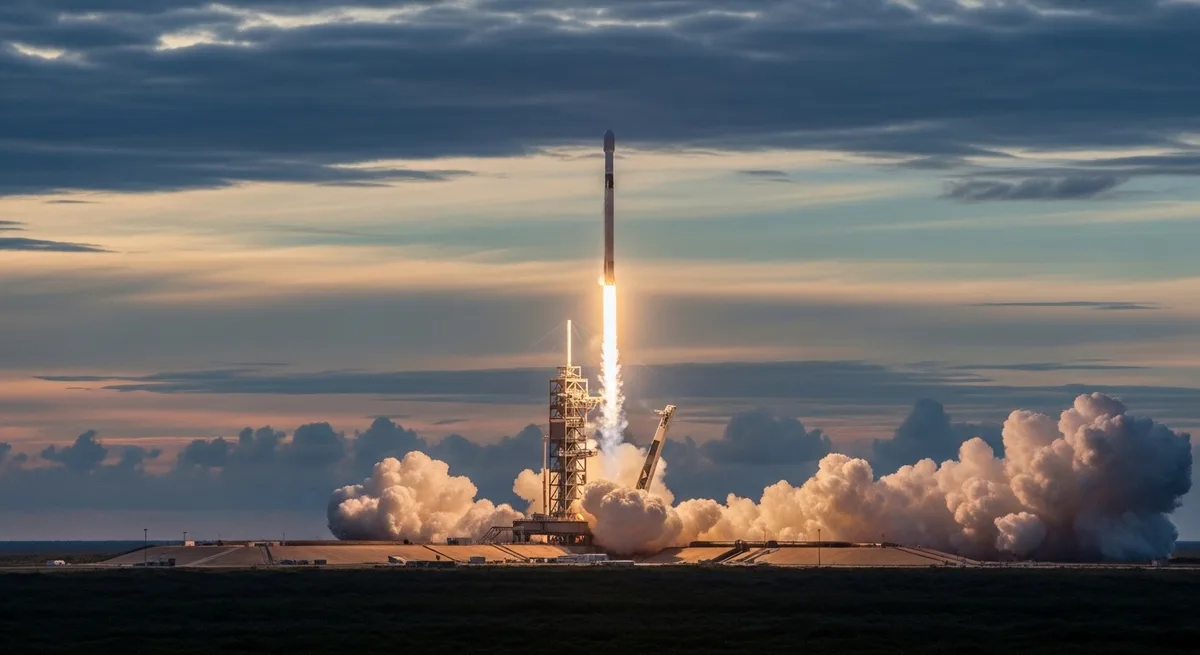
On June 28, 2026, a SpaceX Falcon 9 first stage designated B1085 launched a 15,400-pound SiriusXM satellite from Cape Canaveral. The booster, which had already completed 16 flights, lifted off from Launch Complex 39A and returned to a drone ship in the Atlantic eight and a half minutes later. The SXM-11 satellite reached its initial geosynchronous transfer orbit 34.5 minutes after liftoff, according to Spaceflight Now. It will take several weeks for the spacecraft to circularize its orbit 22,000 miles above the equator, joining SiriusXM’s existing fleet of seven broadcasting satellites.
B1085’s journey began on August 20, 2024, when it launched a batch of Starlink satellites on its maiden flight. Just five weeks later, on September 28, 2024, the same booster carried NASA’s Crew-9 mission to the International Space Station. Astronauts Nick Hague and Aleksandr Gorbunov were on board, with two seats left empty for Butch Wilmore and Suni Williams, who had been stranded on the station since Boeing’s Starliner test flight in August 2024 and would not return until March 2025.
The booster continued its record-breaking streak in late 2024 with the U.S. Space Force’s RRT-1 rapid-response mission. In January 2025, it launched Firefly Aerospace’s Blue Ghost Mission 1, a lunar lander that successfully touched down on Mare Crisium on March 2, 2025, and operated through a full lunar day before succumbing to the cold. In April 2025, B1085 carried Fram2, a private polar-orbit mission funded by crypto billionaire Chun Wang — the first crewed flight to pass over both of Earth’s geographic poles.
Before the June 2026 launch, B1085 had also carried SiriusXM’s SXM-10 satellite. The booster’s reuse highlights SpaceX’s ongoing efforts to reduce costs and increase the frequency of launches. With 17 flights under its belt, B1085 remains a rare example of a Falcon 9 first stage achieving multiple missions across different orbits and purposes, from commercial satellites to crewed spaceflight and lunar exploration.