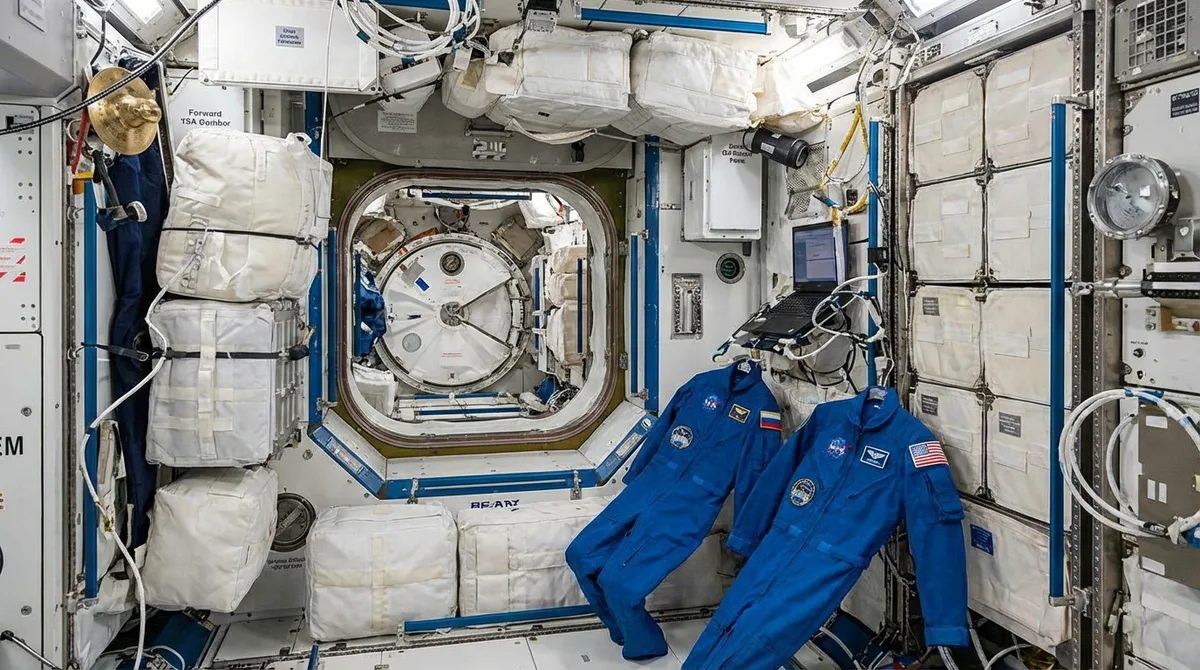
SpaceX's Crew-12 mission launched from Cape Canaveral on Feb. 13, 2026, bringing four astronauts to the International Space Station and restoring its full seven-person crew. The mission followed a month-long period when the ISS operated with a skeleton crew of three after four astronauts from Crew-11 were medically evacuated in early February. NASA and SpaceX confirmed the new crew arrived at the orbital laboratory on Feb. 14, ending a stretch where station operations relied on just one American and two international astronauts.
The ISS had been running on minimal staffing since late January when Crew-11 members were evacuated due to health issues. Station systems and experiments had to be managed with fewer hands, forcing mission controllers to prioritize critical tasks. SpaceX's Crew-12 launch marked the first time in over a year that the ISS had a full complement of astronauts, according to NASA spokesperson Lisa Martinez. The four newcomers will spend about nine months conducting research and maintenance, with a focus on materials science and life-support system upgrades.
The mission is part of NASA's Commercial Crew Program, which contracts SpaceX to transport astronauts to the ISS. The four crew members—two NASA astronauts and two from Japan's JAXA space agency—underwent rigorous training at the Kennedy Space Center before launch. Their arrival allowed the station's existing crew to resume planned experiments that had been delayed during the staffing shortfall.
Since their arrival, the seven astronauts have been adapting to microgravity and setting up new research modules. Flight engineer Takuya Onishi of JAXA said the crew has been working 12-hour shifts to catch up on maintenance tasks. The mission's success highlights the reliability of SpaceX's Crew Dragon spacecraft, which has now completed its 15th crewed flight to the ISS.
NASA officials emphasized that the mission's timing was carefully coordinated with the ISS's orbital trajectory and the availability of docking ports. The restored crew is expected to conduct over 200 experiments during their stay, including studies on bone density loss in microgravity and advanced robotics testing. The mission also marks the first time a Japanese astronaut will lead a spacewalk during their ISS mission.