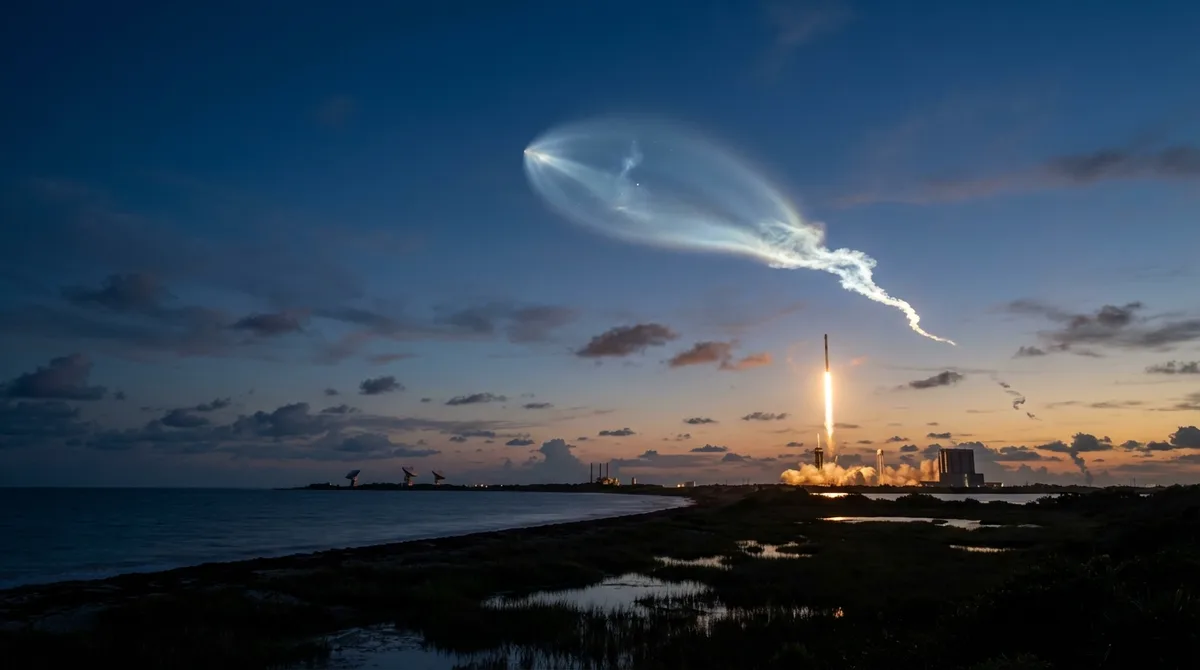
Residents in Pensacola, Florida, reported seeing a glowing, jellyfish-like formation in the sky shortly after a SpaceX Falcon 9 rocket launched 29 Starlink satellites at 4:50 a.m. CT on Wednesday. The event occurred from Space Launch Complex 40 at Cape Canaveral Space Force Station in Brevard County. SpaceX confirmed the launch, noting the first stage booster completed its 25th flight and landed on the A Shortfall of Gravitas droneship in the Atlantic Ocean.\n\nPhotos from viewers began arriving at WEAR News around 4:55 a.m. CT, showing the unusual visual display. The 'space jellyfish' is a known phenomenon linked to rocket launches, caused by the interaction of exhaust plumes with atmospheric conditions. No injuries or damage were reported, and SpaceX did not comment further on the sighting.\n\nLocal officials and residents described the event as a rare but harmless occurrence. The phenomenon typically lasts only a few minutes and is visible under specific atmospheric conditions. Pensacola police said there were no calls related to the sighting, and air traffic control reported no disruptions.\n\nThis was the 25th flight for the Falcon 9 booster used in the mission, highlighting SpaceX's ongoing efforts to reuse rocket components. The company has conducted over 100 launches since 2010, with Starlink missions now a regular part of its operations.\n\nResidents shared videos and images of the display on social media, with some describing the glow as resembling a 'floating lantern' or 'streak of light.' Meteorologists said the phenomenon is not uncommon during rocket launches but is often overlooked due to its brief duration.\n\nSpaceX has not issued any additional statements about the event, but the company continues to monitor atmospheric conditions during launches to ensure safety. The next Starlink mission is scheduled for March 18, 2026, from the same launch site.
Space & Tech
'Space jellyfish' spotted over Northwest Florida after SpaceX Starlink launch
A 'space jellyfish' phenomenon was observed in the sky above Pensacola following a SpaceX Starlink rocket launch from Cape Canaveral on March 4, 2026.
Source: WEAR-tv