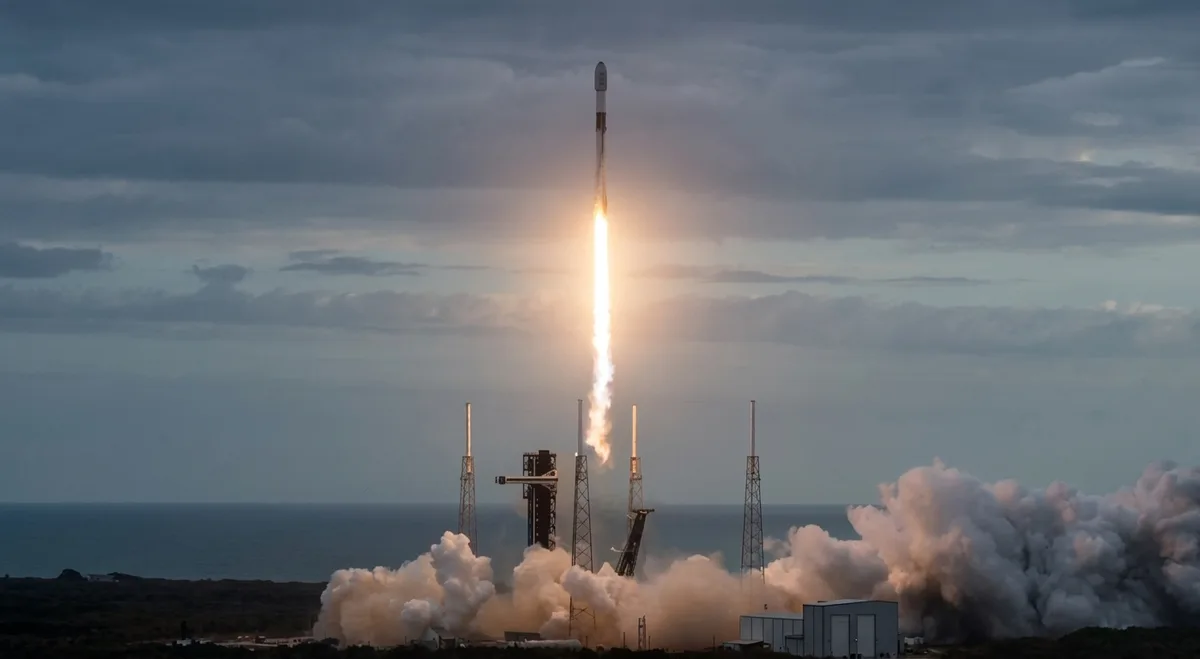
Brevard County ended 2025 with a record 109 orbital launches from SpaceX, United Launch Alliance, and Blue Origin, according to data compiled by local tracking groups. The number surpassed previous years and set a new benchmark for the Space Coast's role in the global space industry. SpaceX alone accounted for 101 of those launches, all on Falcon 9 rockets, while ULA contributed six and Blue Origin added two, including its New Glenn rocket on two missions. Four human spaceflights also took place, including SpaceX's Crew-10 and Crew-11 missions and the Ax-4 private mission.
The pace is expected to continue in 2026, with 18 orbital launches projected for the Space Coast so far this year. As of March 14, 17 of those have already occurred, all from SpaceX's Falcon 9 rocket. United Launch Alliance is set to launch its Vulcan rocket once, but no Blue Origin missions have been recorded yet. The year also includes NASA's Artemis II mission, which will use the Space Launch System rocket for a crewed lunar flyby. The first launch of 2026 was SpaceX's Starlink 10-48 mission on March 14 from Cape Canaveral Space Force Station's Space Launch Complex 40, carrying 29 Starlink satellites. The flight was delayed from March 12 and 13 due to weather.
Comparing the data, 2024 saw 93 launches, with SpaceX leading at 88 missions, including two Falcon Heavy flights. ULA contributed five launches, and Blue Origin added two. In 2023, the Space Coast recorded 72 launches, with SpaceX again dominant at 68 missions. Relativity Space made one launch that year, its first since 2022. Human spaceflight activity has also grown, with three missions in 2023, four in 2024, and four in 2025.
Launch details are tracked by organizations like the Florida Space Coast News and the Space Launch Schedule website. The March 14 SpaceX mission marked the sixth flight of the Falcon 9 rocket in 2026, with the vehicle landing at Cape Canaveral's Landing Zone 1. The Starlink mission is part of SpaceX's ongoing effort to expand global broadband coverage. Updates on future launches are expected as the year progresses, with NASA's Artemis II mission slated for a later date in 2026.