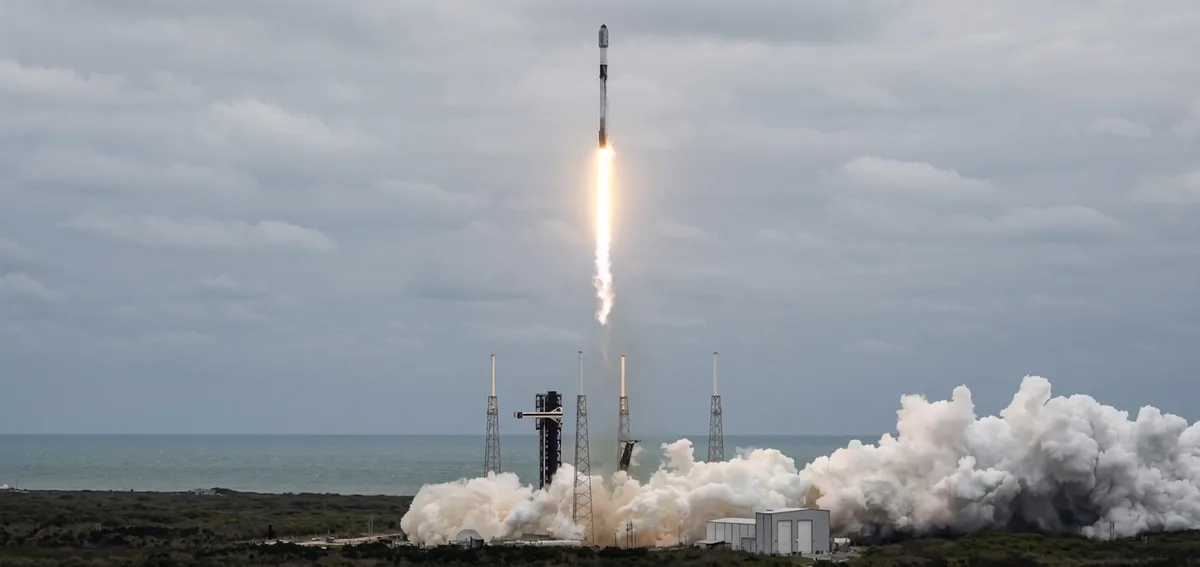
A SpaceX Falcon 9 rocket launched from Cape Canaveral Space Force Station’s Space Launch Complex 40 on March 17, 2026, carrying 29 Starlink satellites. This was the 11th flight of the first-stage booster, which landed at Landing Zone 1. The mission marked the 19th orbital launch from the Space Coast in 2026 so far, with all launches occurring from Cape Canaveral and none from Kennedy Space Center. SpaceX has conducted all 18 launches this year, while United Launch Alliance has one Vulcan Centaur flight and Blue Origin has none.
The Space Coast ended 2025 with 109 orbital launches, a record driven by SpaceX’s 101 Falcon 9 missions, six ULA launches, and two Blue Origin flights. That included four human spaceflights: Crew-10, Fram2, Ax-4, and Crew-11. In 2024, the region saw 93 launches, including five human spaceflights, and 72 in 2023. The numbers reflect growing activity at Cape Canaveral, which accounted for 83 of 2025’s launches, compared to Kennedy Space Center’s 26.
2026 could see a similar pace as SpaceX, ULA, and Blue Origin ramp up operations. NASA’s Artemis II mission, which will launch the Space Launch System rocket, is expected to add to the total. As of March 17, 2026, the Space Coast had 19 orbital launches this year, with 18 from SpaceX and one from ULA. No launches have come from Blue Origin’s New Glenn rocket so far.
The increase in launches follows a trend of expanding commercial and government space activities. SpaceX’s reuse of boosters, like the Falcon 9’s 11th flight on the Starlink mission, highlights cost efficiencies. However, the absence of Blue Origin launches in 2026 contrasts with their two flights in 2025. Updates on future launches will be shared as schedules solidify.