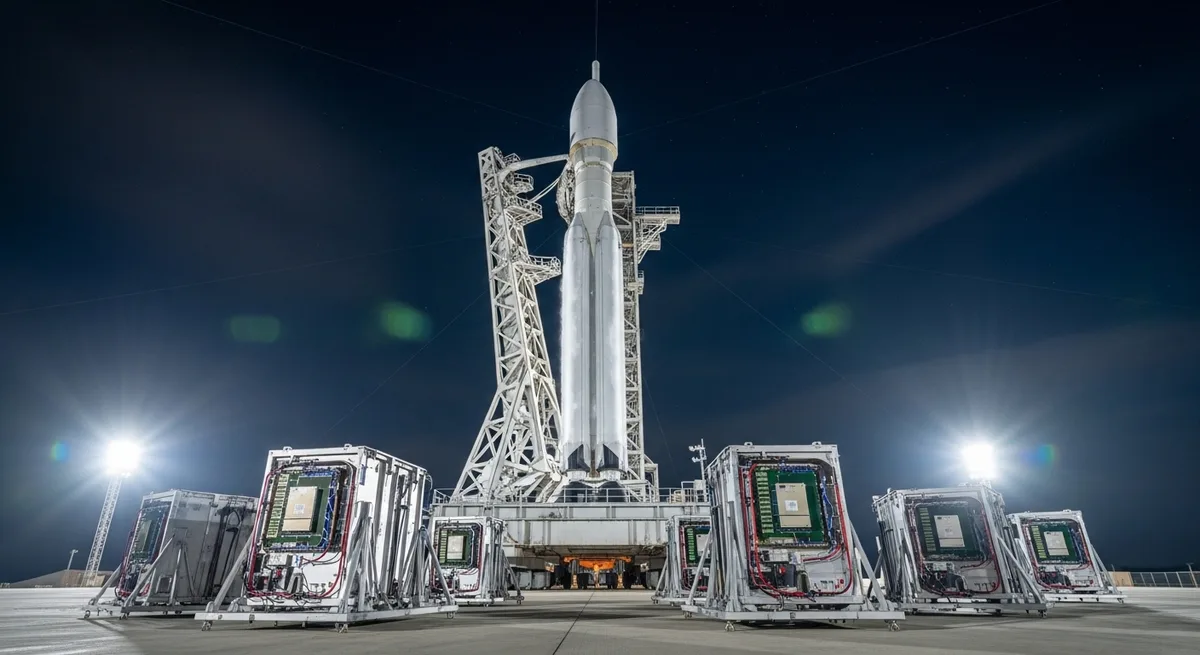
A SpaceX Falcon 9 rocket lifted off from Space Launch Complex 40 at 6:50 a.m. EDT on July 5, 2026, carrying 29 Starlink satellites and two semiconductor fabrication test beds developed by Washington D.C.-based startup Besxar Space Industries. The mission, designated Starlink 10-50, marked the first flight of the company’s ‘Fabships’—space-based manufacturing pods designed to produce ultra-pure semiconductor substrates using the vacuum of space. The Falcon 9’s first-stage booster carried the pods on an eight-minute, 19-second sub-orbital journey before returning to Earth for a landing at Cape Canaveral’s Landing Zone 1. SpaceX confirmed the Starlink satellites deployed successfully shortly after liftoff. Space Force meteorologists had predicted an 85% chance of favorable weather for the launch, which occurred shortly after sunrise. Besxar said it booked 12 Falcon 9 flights in October 2025 to test its space-based fabrication technology. The company aims to overcome Earth-based limitations in semiconductor production, including power and cooling constraints in AI data centers and the physical limits of silicon. Ashley Pilipiszyn, Besxar’s founder and CEO, said in a 2025 statement that Earth-based fabrication plants cannot achieve the vacuum or yields required for next-generation materials. The Fabships’ first test flight followed a year of planning and development. The Falcon 9 booster reached the Kármán Line, the boundary of space at 100 kilometers, before separating from the satellites and test beds. SpaceX’s Starlink mission continues expanding global broadband coverage, while Besxar’s experiment could pave the way for new methods of manufacturing critical components for electronics and computing.
Space & Tech
Semiconductor test beds ride Falcon 9 booster on Starlink mission
Two semiconductor fabrication test beds launched aboard a SpaceX Falcon 9 rocket from Cape Canaveral on July 5, 2026, alongside 29 Starlink satellites.
Source: Spaceflight Now