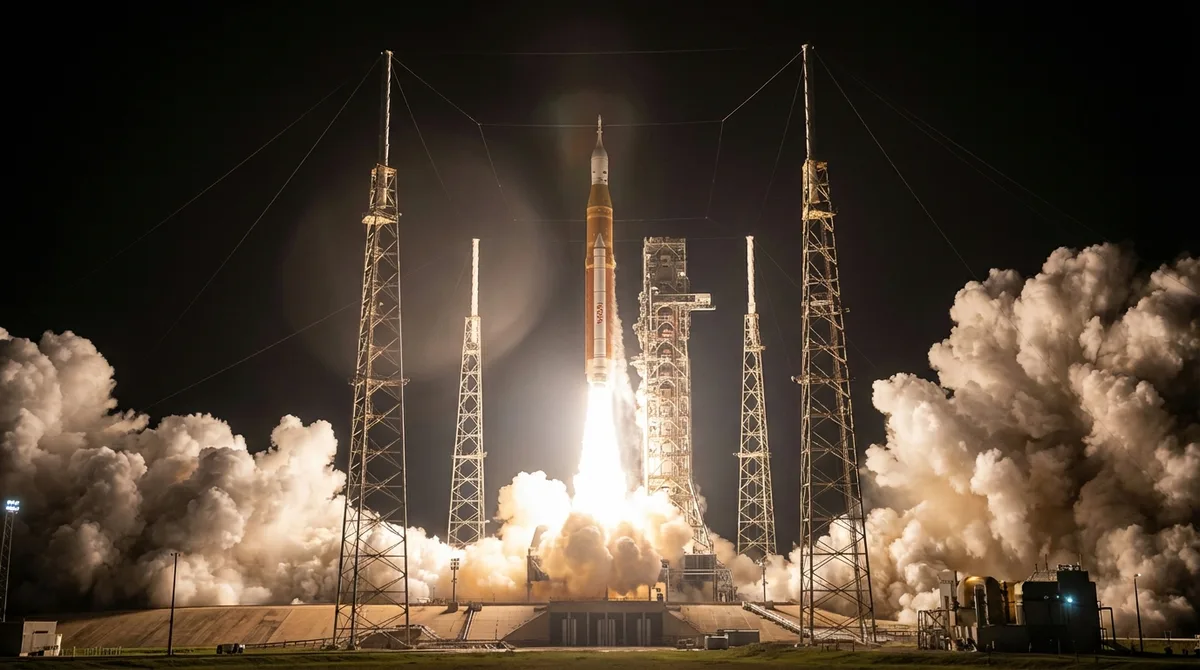
NASA has set its sights on March for the first crewed Artemis mission to the moon, according to a recent update from the space agency. The announcement follows a successful fueling test at Kennedy Space Center on February 19, 2026, which cleared a key hurdle for the mission. The test involved loading liquid hydrogen and oxygen into the Space Launch System (SLS) rocket, a critical step before any launch. Engineers confirmed the fueling process met all safety and performance standards, allowing the mission timeline to proceed as planned.
The Artemis program, which aims to return humans to the moon by 2025, has faced delays in the past due to technical challenges and supply chain issues. However, the recent success at Kennedy Space Center has given officials confidence that the first crewed mission—Artemis II—could now launch as early as March 2026. The mission will carry astronauts around the moon and back, serving as a precursor to the eventual goal of landing the first woman and person of color on the lunar surface during Artemis III.
Kennedy Space Center has been the hub of activity for the Artemis program, with the SLS rocket and Orion spacecraft undergoing extensive testing. The fueling test was conducted at Pad 39B, the same launch site used for the Apollo missions in the 1960s and 1970s. NASA officials emphasized that the test results were consistent with predictions, reducing the risk of delays. The next major step for the mission is a full dress rehearsal, known as a wet dress rehearsal, which will simulate a complete countdown and launch sequence.
Local residents and space enthusiasts in Brevard County have been following the progress closely. The Artemis mission is expected to bring significant economic benefits to the area, including jobs and increased tourism. However, the focus remains on the technical challenges ahead. NASA has not yet announced a specific launch date but has indicated that March is the current target. The agency will continue to monitor weather conditions and other factors that could affect the mission timeline.