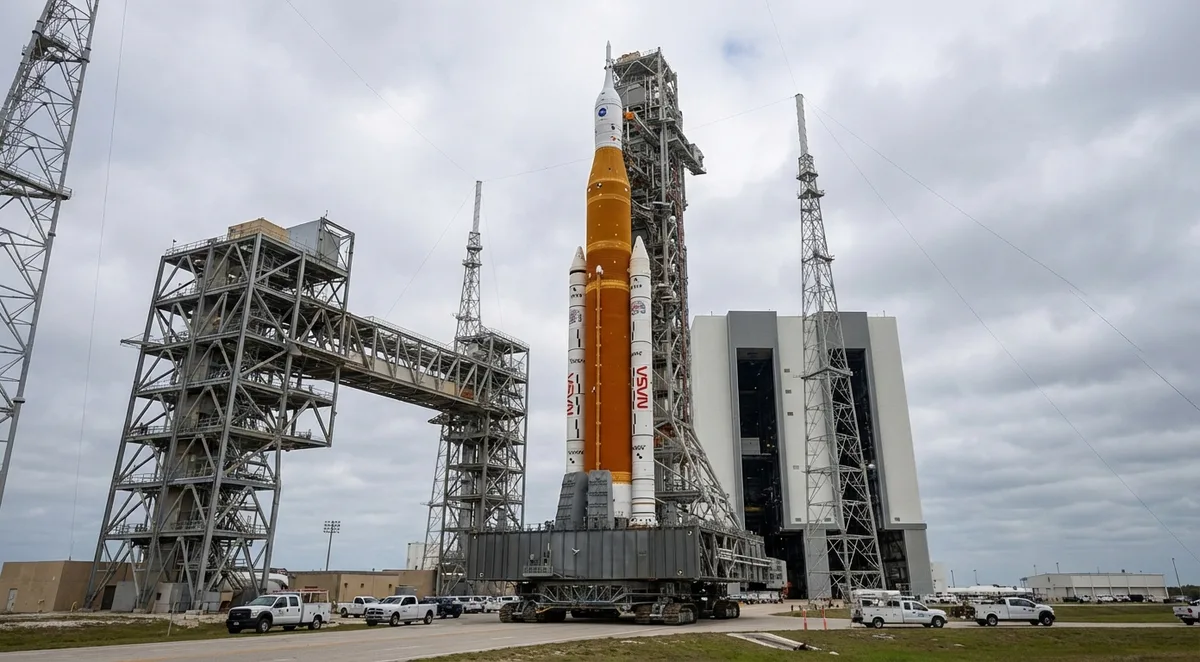
NASA is moving the Artemis II rocket and Orion spacecraft back to the Vehicle Assembly Building (VAB) at Kennedy Space Center following a helium flow issue detected overnight Feb. 21. The problem was identified in the interim cryogenic propulsion stage of the Space Launch System (SLS) rocket, which could delay the mission's planned March launch window. Teams at the space center are now preparing for the rollback as engineers analyze data to determine the next steps.
The issue emerged during routine monitoring of the SLS rocket's systems, which showed interrupted helium flow to the upper stage. This has forced NASA to halt preparations for the Artemis II mission, which is intended to carry astronauts around the Moon for the first time since the Apollo era. Officials said the rollback is a precaution to allow thorough troubleshooting at both Launch Pad 39B and the VAB, where the rocket will be moved for further analysis.
NASA personnel have begun dismantling the pad access platform and other equipment to facilitate the rollback. The process is expected to take several days, with teams working around the clock to minimize delays. Engineers are reviewing telemetry data and conducting tests to pinpoint the cause of the helium flow disruption. No immediate timeline for repairs or a new launch window has been announced.
The Artemis II mission, scheduled to launch no earlier than May 2026, aims to send a crew of four astronauts on a lunar orbit mission. The delay comes as part of NASA's broader Artemis program, which seeks to return humans to the Moon by 2025. The rollback highlights the complexities of deep-space missions and the rigorous testing required for the SLS rocket, a key component of the program.