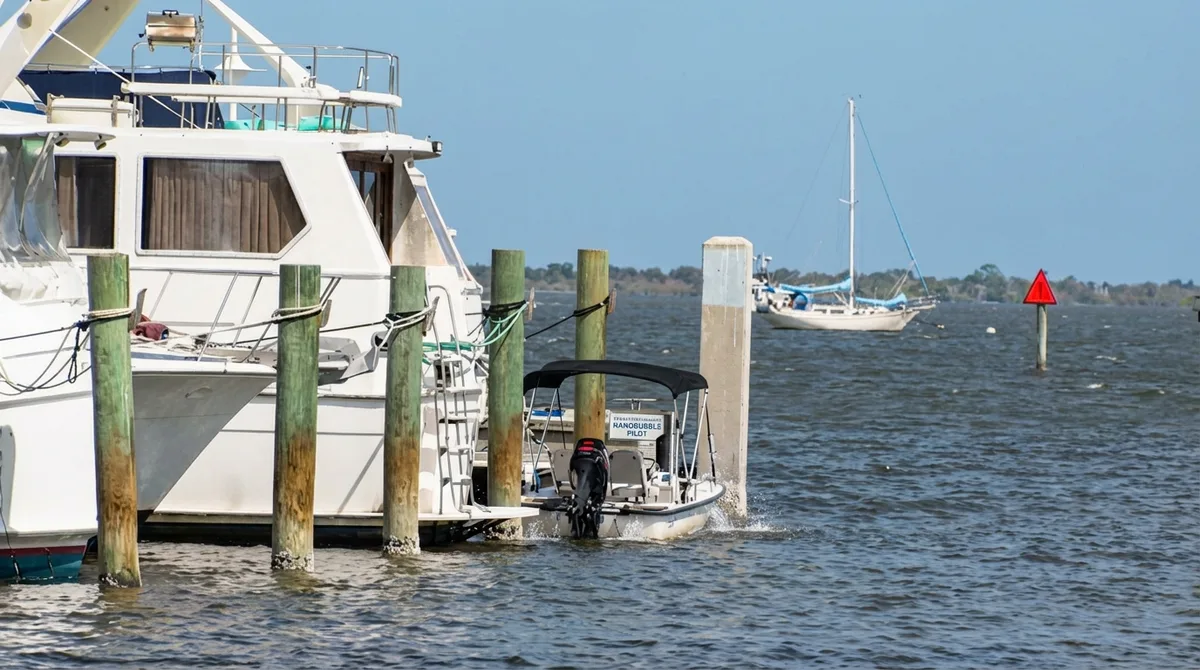
A pilot project called Green to Clean is underway in the Indian River Lagoon to test whether nanobubble technology can reduce muck and improve water clarity. The initiative pairs private technology from Moleaer with independent science oversight from Florida Institute of Technology. Local officials and community funders are supporting the effort as part of a broader push to address water quality issues in the lagoon. The project began in March 2026 and is expected to run for 12 months.
The nanobubble technology works by releasing tiny oxygen bubbles into the water. These bubbles increase oxygen levels and help break down organic matter that contributes to muck buildup. Florida Institute of Technology researchers are monitoring the process to ensure the method is effective and safe for the ecosystem. Preliminary data from similar projects in other areas have shown a reduction in nutrient runoff and improved water transparency.
Funding for the pilot comes from a mix of public and private sources. The city of Cocoa and several local environmental groups have pledged support. Community members have also contributed through crowdfunding campaigns. Project organizers say the results will determine whether the approach can be scaled up for larger sections of the lagoon.
The Indian River Lagoon has faced declining water quality for years due to pollution and algal blooms. If successful, the nanobubble method could offer a new tool for restoring the lagoon’s health. Scientists involved in the project say they will publish findings in peer-reviewed journals and share data with other coastal communities facing similar challenges.