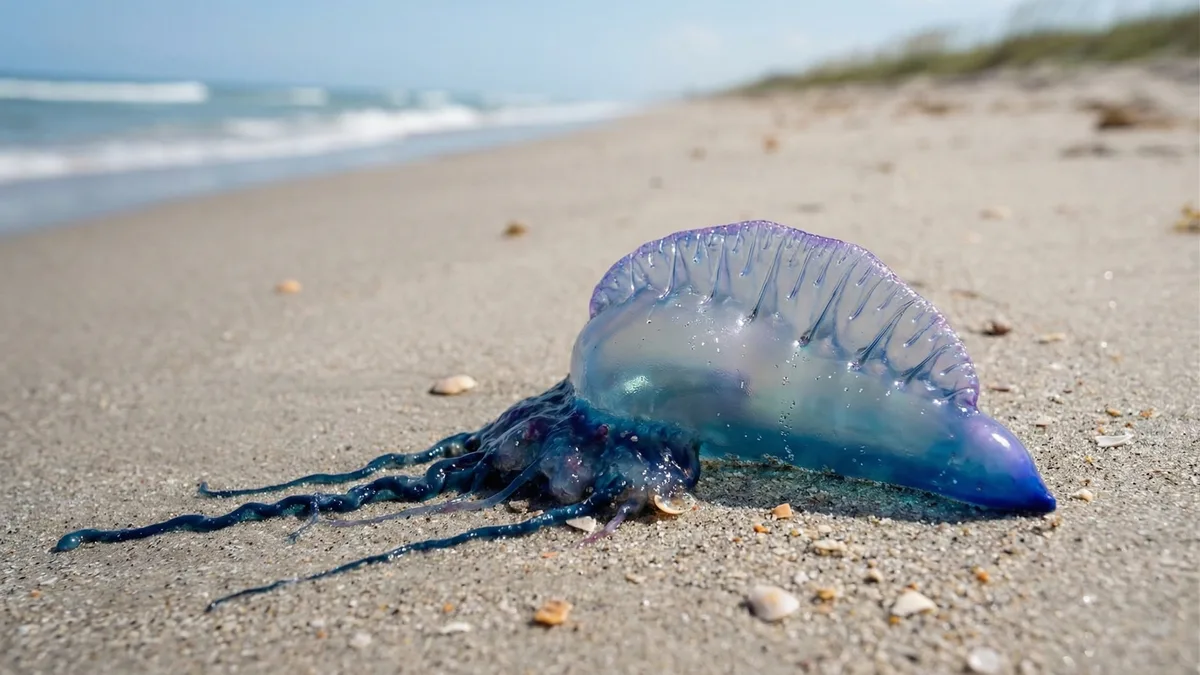
Multiple Portuguese man o' war jellyfish were found on Indialantic Beach in Brevard County on Thursday, March 7, 2026. Adrea Doub, a local resident, spotted blue spots on the sand while walking with her family. Some of the creatures were the size of a quarter, others larger. WESH 2's weather team said the warm temperatures and easterly onshore winds common this time of year often push the venomous sea creatures onto shore.
The jellyfish, known scientifically as Physalia physalis, have a soft, balloon-like exterior that can mislead swimmers and beachgoers. Their long tentacles contain a paralyzing venom that can cause severe pain and allergic reactions. Even when the creatures wash up dead, their tentacles can still sting. Lifeguards and beach officers carry vinegar to neutralize stings, but officials urge people to avoid touching any blue spots on the sand.
Doub described the discovery as unexpected but not unusual. "We’ve seen them before, but not this many," she said. The weather team noted that man o' war sightings increase in late winter and early spring as ocean currents shift. The creatures typically drift in from the Atlantic, carried by winds and waves.
Local officials have not issued any beach closures but are monitoring the situation. The Florida Fish and Wildlife Conservation Commission warns that man o' war stings can be dangerous, especially to children and people with heart conditions. Residents are advised to report sightings to lifeguards or call 911 if someone is stung.
The presence of the jellyfish highlights the unpredictable nature of coastal life in Brevard County. While the warm weather is a welcome sign of spring, it also brings risks that require vigilance. Beachgoers are reminded to stay alert and follow safety guidelines when visiting the shore.