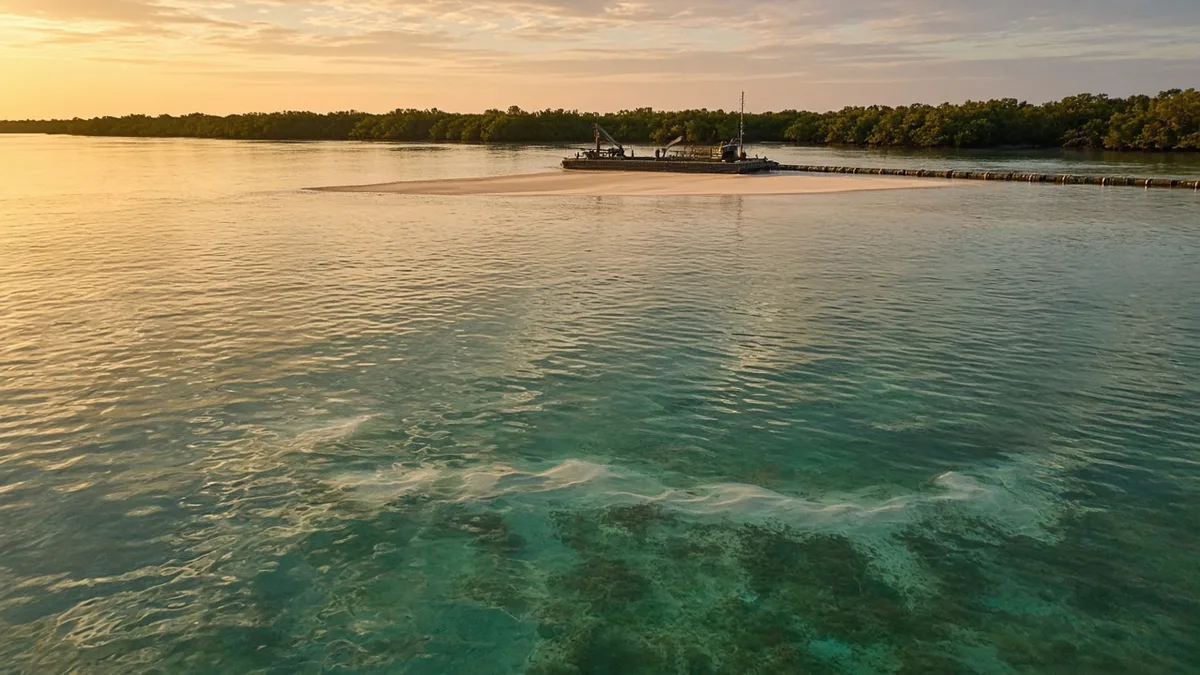
COCOA BEACH — Barges and sand-pumping gear are working the Banana River next to the Cocoa Beach Country Club as Brevard County and the city test a different answer to lagoon muck: instead of dredging it out, bury it under a foot of clean sand.
The City of Cocoa Beach, in a July 1 project notice, said it is partnering with the county on what its bid documents call the Cocoa Beach Golf Muck Capping Project, in the waters at the west end of Minutemen Causeway. Legacy muck, the nutrient-rich sediment that has piled up on the lagoon bottom over decades, releases nitrogen and phosphorus that feed algae and poor water quality, the city said. Capping places a layer of clean sand over that sediment to cut the release, restore a sandier bottom and improve habitat for fish, seagrass and other wildlife.
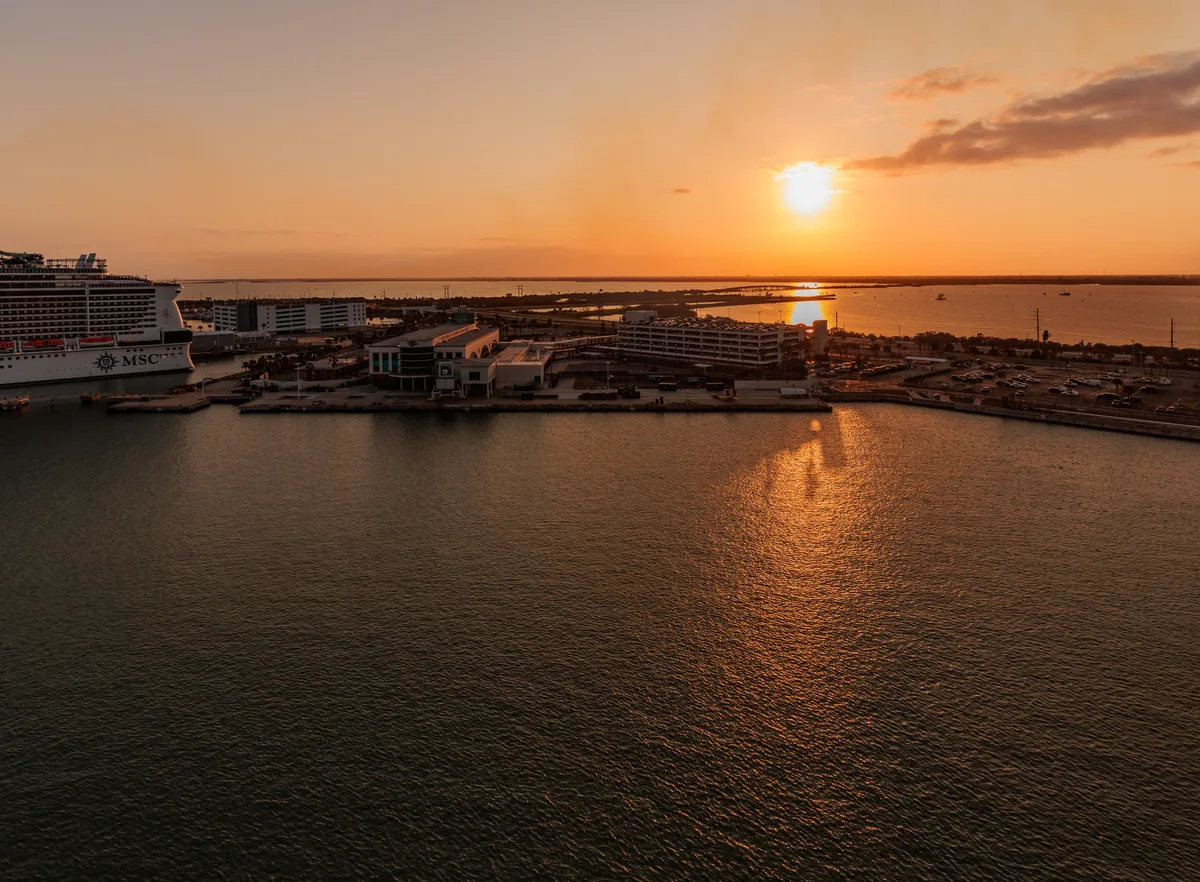
The city’s invitation to bid, contract CB 25-010, describes about 141 acres of underwater thin-layer muck capping plus 1.6 acres of habitat caps. The bid quantities are 225,000 cubic yards of capping sand and 5,200 cubic yards for the habitat caps. The city has not published an official tonnage.
Cocoa Beach’s fiscal 2024 annual financial report puts total project and grant funding at $41,103,198: $29,103,198 from the county’s Save Our Indian River Lagoon sales-tax program and $12,000,000 from the Florida Department of Environmental Protection. The state share traces to a fiscal 2022-23 legislative funding request for Cocoa Beach muck dredging and capping, which described the site as roughly 140 acres holding more than 1 million cubic yards of muck and projected the work would cut nitrogen flowing into the water by 29,694 pounds a year and phosphorus by 2,058 pounds. The county’s 2026 lagoon plan update, according to the newsroom’s review of that document, puts the muck’s current contribution higher, at more than 55,000 pounds of nitrogen and about 3,000 pounds of phosphorus a year.
Two contractors made it through the city’s two-envelope bid process. When prices were opened Dec. 5, 2025, J.F. Brennan Company, Inc. bid $33,499,900 and Sevenson Environmental Services bid $37,278,600. A Jan. 5, 2026 review memo from Geosyntec Consultants, the city’s engineer on the project, recommended award to Brennan as the lowest responsive bidder. That figure is construction only; design, oversight and contingency sit inside the larger $41.1 million. The city’s bid page now lists the contract as awarded, and the county’s lagoon program reported a notice to proceed on May 6.
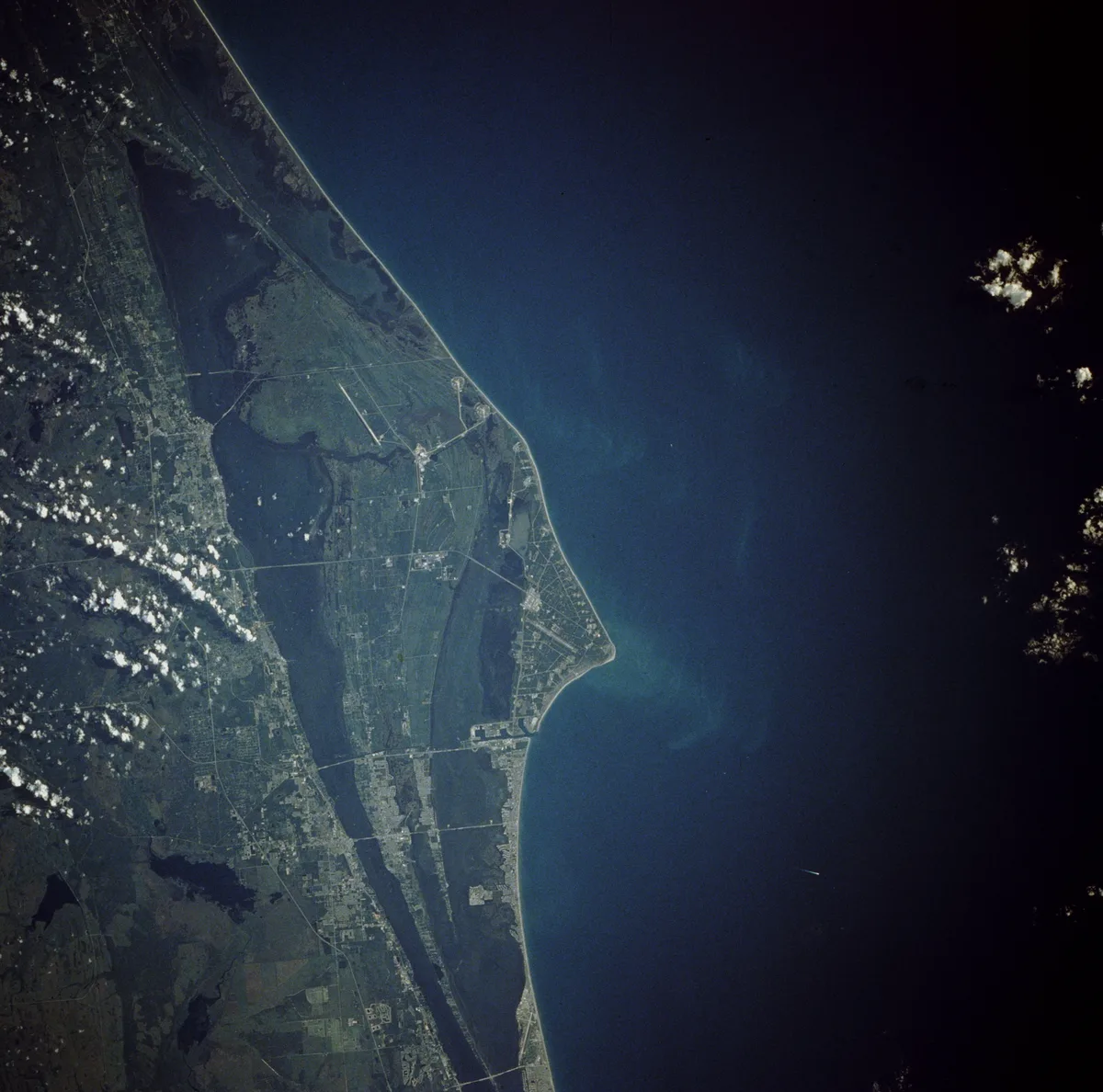
The bid documents set substantial completion no later than Dec. 31, 2027, and final completion no later than Feb. 29, 2028. Work was already on the water by the time of the city’s July notice, and a FOX 35 report in late July said officials expect the method could be copied elsewhere in the county if the pilot works.
The tradeoff is simple to state. Dredging removes muck from the lagoon. Capping leaves it in place under a lid of sand and bets that the lid holds. Whether it survives storms, and whether seagrass actually takes on the new bottom, will decide if $41 million becomes a template for the rest of the lagoon or an expensive experiment. In the meantime, the city has a boater advisory out for the work zone: slow down, stay clear of the equipment and follow the posted markers.


