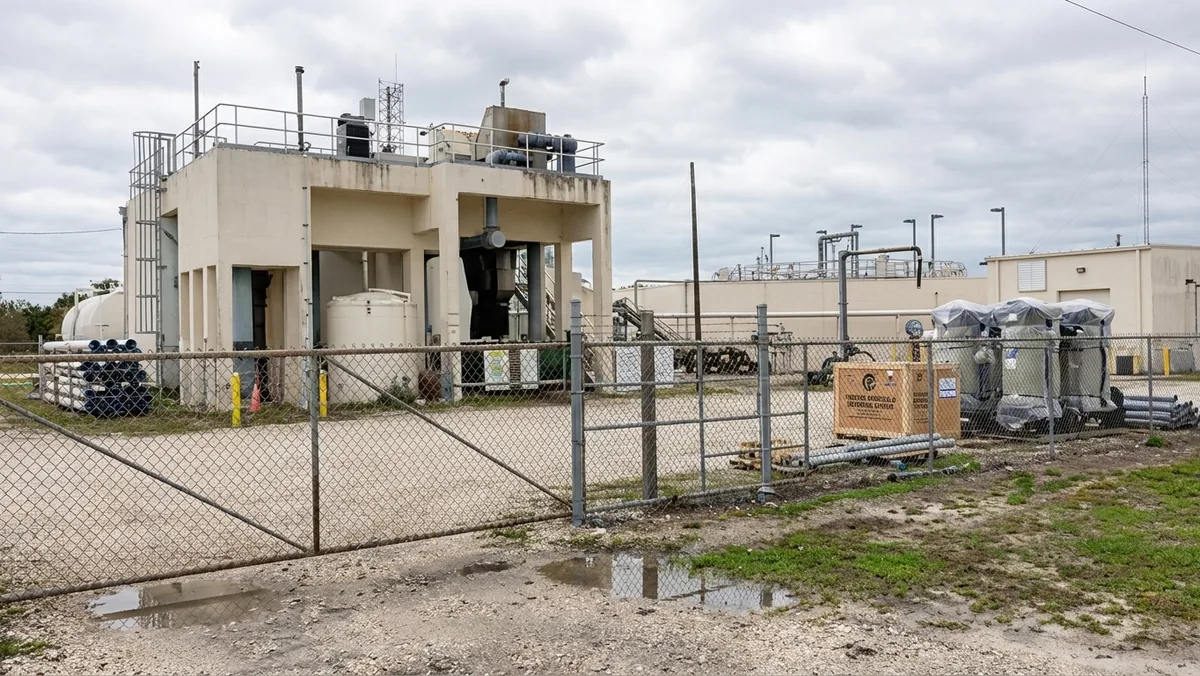
Brevard County officials confirmed this week that new water treatment systems will be installed at two major plants to remove per- and polyfluoroalkyl substances (PFAS) from drinking water. The upgrades are part of a $12.5 million project approved by the county commission in June 2023. County Manager Mark Womack said the work is expected to begin in early 2025 and be fully operational by mid-2026.
The targeted chemicals, known as "forever chemicals," have been linked to cancer, liver damage, and developmental issues. They are commonly found in firefighting foam, nonstick cookware, and industrial waste. Testing in 2022 detected low levels of PFAS in groundwater near the Kennedy Space Center, prompting the county to accelerate its response. "These chemicals persist in the environment for decades," said Environmental Services Director Lisa Chen. "We can’t afford to wait."
The new systems will use granular activated carbon and ion exchange technology to filter out PFAS. Similar treatments are already in use at three smaller plants across the county, but the upgrades will expand capacity to serve all 250,000 residents. The project includes replacing aging infrastructure at the Melbourne Water Reclamation Facility and the Titusville Water Treatment Plant.
Residents in areas near the Space Coast’s industrial zones have raised concerns about contamination. At a public meeting last month, dozens attended to ask questions about testing protocols and timelines. "We need transparency," said Jim Roberts, a Titusville homeowner. "If they’re going to spend this money, we want to see results." The county has committed to releasing quarterly water quality reports starting next year.
The work is part of a broader state initiative to address PFAS contamination. Florida lawmakers passed a 2023 bill requiring all public water systems to test for the chemicals by 2025. Brevard County officials said they are coordinating with the Florida Department of Environmental Protection to ensure compliance. "This isn’t just about meeting regulations," Womack said. "It’s about protecting our community’s health."