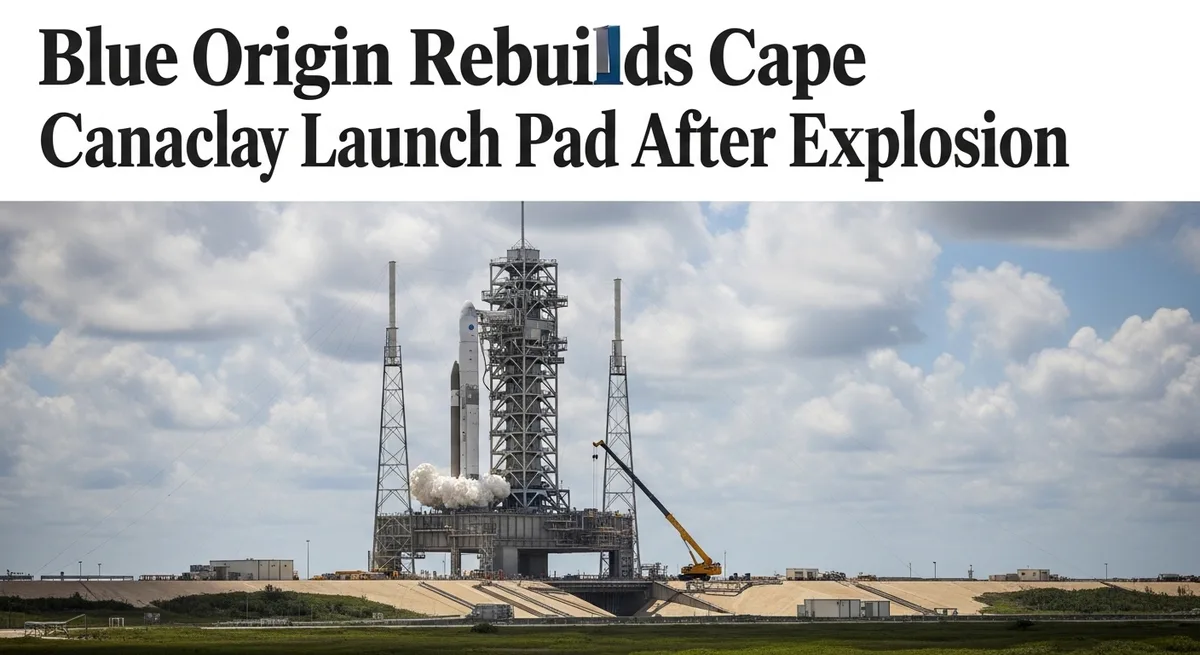
Blue Origin has made significant progress rebuilding its Cape Canaveral launch pad nearly two months after a July 2026 explosion during a static fire test of the New Glenn rocket. The company’s efforts are ahead of schedule, according to Dr. Don Platt, director of Florida Tech’s spaceport education program. 'They essentially did the complete recovery of all the debris and evidence in about three weeks,' Platt said. 'I think they’re moving ahead really quickly.'
The explosion occurred on May 15, 2026, when a test of the New Glenn’s first-stage engine failed at Launch Complex 36. Blue Origin has since hired hundreds of contractors to reconstruct the site, with work focusing on repairing infrastructure damaged by the blast. The company is also collaborating with NASA to test the rocket’s upper stage in Mississippi, a step aimed at accelerating the return to flight.
Blue Origin has committed to returning the New Glenn to operational status by 2026, though no specific date has been set for the next launch. The company’s partnership with NASA includes using the agency’s facilities for upper-stage testing, a move that could reduce delays caused by the Florida accident. 'This is a critical step in getting back to flight,' said a Blue Origin spokesperson in a July 31 statement.
Local officials and industry analysts are watching the rebuild closely. The Space Coast economy relies heavily on aerospace activity, and the loss of the launch pad temporarily disrupted operations at the Kennedy Space Center. With reconstruction progressing faster than expected, some residents are optimistic about the return of commercial launches. 'It’s a big deal for the region,' said Platt. 'This site is a cornerstone of the local space industry.'