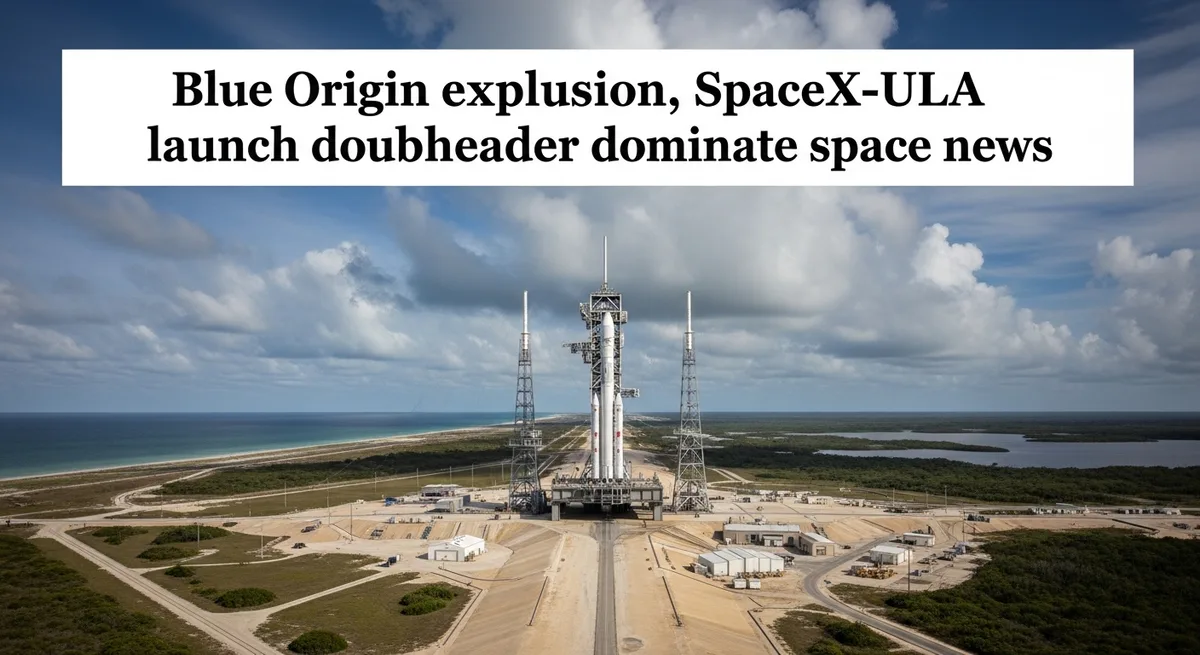
A fireball from a Blue Origin rocket explosion lit up the night sky over Cape Canaveral on July 13, sending shockwaves through the Space Coast’s aerospace community. The incident occurred at the company’s Launch Site One near the Kennedy Space Center, though no injuries were reported. Blue Origin employees told Florida Today the explosion happened during a routine test of a new propulsion system, but details remain unclear as the company has not released a full statement.
The explosion overshadowed a major space event later that day: a rare doubleheader launch from Cape Canaveral’s Space Launch Complex 41. SpaceX and United Launch Alliance (ULA) each launched rockets within hours of each other, marking the first time the two companies shared a launch pad simultaneously. The SpaceX Falcon 9 carried a batch of Starlink satellites, while ULA’s Atlas V rocket delivered a classified National Reconnaissance Office payload into orbit. Both missions were successful, with SpaceX recovering its first-stage booster for the 10th time this year.
Local aerospace workers said the back-to-back launches highlighted the Cape’s role as a hub for commercial space activity. "It’s a busy time for the Space Coast," said John Martinez, a systems engineer at a nearby defense contractor. "But the Blue Origin incident reminds us how fragile these operations can be." The U.S. Air Force is reviewing its safety protocols at the shared launch site after the doubleheader, according to a spokesperson.
Blue Origin has not commented publicly on the July 13 incident, but internal emails obtained by Florida Today suggest investigators are focusing on a failed engine test. The company’s next scheduled launch, a New Shepard suborbital flight, has been postponed until early August. Meanwhile, SpaceX and ULA continue their dominance of the Cape’s launch calendar, with seven more missions planned before year’s end.
Residents near the explosion site reported seeing debris from the Blue Origin incident scattered along the coast, though no environmental impact has been confirmed. The Florida Fish and Wildlife Conservation Commission is monitoring the area for any signs of contamination. As the Space Coast recovers from the unexpected event, the region’s aerospace industry remains focused on its next milestones.